Basic White Loaf recipe
This recipe is designed for absolute beginners. Take your time and follow each step. You don’t need a mixer—just your hands and a bowl.
Equipment
- baking bowl
- linen cloth or tea towel to cover
- loaf tin
- lame/sharp knife or blade
- cooling rack
Ingredients
- 500 g strong white bread flour
- 2 tsp fine salt
- 7 g dried yeast one standard sachet
- 300 ml warm water about body-temperature
Instructions
Mix the dry ingredients
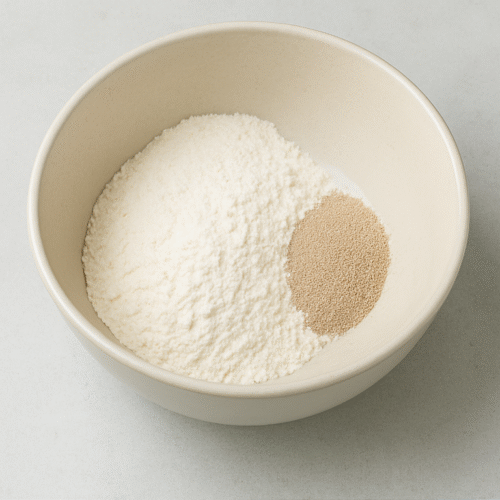
- Place your bowl on weighing scales and use a scoop or serving spoon to measure the flour into the bowl
- Sprinkle the yeast onto one side of the bowl and the salt on the opposite side
Add water and form a dough
- Pour in 300 ml warm water. Use your hand or a wooden spoon to mix until the dough comes together.
- If it’s very dry, add a little more water, a tablespoon at a time.
- Goal: a soft, slightly sticky dough.
Knead (10 minutes)
- Lightly flour your work surface.
- Push the dough away from you with the heel of your hand, fold back, turn, and repeat.
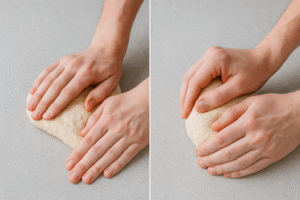
- After 8–10 minutes the dough should feel smooth and stretchy.
- Tip: If it sticks, dust your hands—not the dough—with flour.
First rise (1–2 hours)
- Place the dough back in the bowl.
- Cover with a clean cloth
- Leave somewhere warm until it doubles in size.
Shape the loaf
- Gently tip the dough onto the surface. Press the air out with your fingertips.
- Roll or fold it into a tight loaf shape.
- Place into a greased loaf tin or on a baking tray.
Second rise (30–45 minutes)
- Cover again and let it rise until puffy and slightly larger.
- Do not rush this—good rise means soft bread.
Bake
- Preheat oven to 220°C (200°C fan) / 430°F.
- Just before putting the bread dough in the oven, slash 3 cuts across the top of the dough with a lame or sharp blade
- Place in the centre of the oven and bake for 30 minutes.
- The loaf is done when the top is golden and it sounds hollow when tapped underneath.
Cool
- Let the bread cool on a wire rack for at least 30 minutes before slicing. Cutting too early makes it gummy.
Notes
Temperature matters: Water should feel warm, not hot. Hot water will kill yeast.
Patience: If the dough hasn’t doubled, leave it longer—yeast works at its own pace.
Practice: Every loaf teaches you something. Trust the process.
Tried this recipe?Let us know how it was!