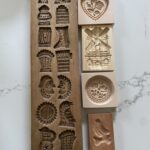
How to Use Wooden Speculaas Moulds
Wooden speculaas moulds are lovely to use once you get the workflow right.
Here’s a practical, step-by-step method that works with traditional stiff dough.
Instructions
Season the mould (first time only)
- Brush with neutral oil (rapeseed, sunflower).
- Rub with a cloth until matte, no pooled oil.
- Let it dry overnight.
- This helps the wood reject moisture and prevents dough sticking.
- Do not wash in water. Never soak.
- If dusty, wipe with a dry or lightly oiled cloth.
Use a stiff dough
- Low moisture → almost like modelling clay.
- Wet or buttery doughs will smear in the cavities and tear when unmoulded.
- Tip: After mixing dough, rest 8–24 hours in the fridge. This relaxes the flour + hydrates the spices = perfect imprint
Lightly dust the mould
- Use rice flour or potato starch— better than wheat, which gets sticky.
- Shake out excess; you want a dusting, not a layer.
Press dough into the mould
- Take a piece of dough slightly larger than the cavity.
- Press with thumbs from centre outward.
- Use a small rolling pin or palm to make the surface flush with the mould.
- Pack firmly. Air gaps = broken noses, missing hands, unclean edges.
Remove the excess
- Use a dough scraper or knife to shave across the top flush with the wood.
- Smooth the back so it’s even.
Release Method 1 — Tap & lift
- Hold mould face down over a lightly floured surface.
- Tap the corner or handle against the table edge.
- The biscuit drops cleanly.
Release Method 2 — Peel
- Lay mould face down on parchment.
- Press the parchment to the table with one hand.
- Peel the mould up and back slowly.
Chill before baking (optional but recommended)
- Place cookies on a tray.
- Chill 30–60 min.
- This preserves sharp detail in the oven.
Care & maintenance
- After use: dry brush only.
- If necessary: wipe with cloth slightly damp with oil.
- Never soap, never dishwasher.
- If mould looks thirsty/dry: re-oil lightly, let dry overnight.
Common mistakes
- ❌ Dough too soft → faces blur, limbs merge.
- ❌ Too much flour in the mould → ghostly imprint, chalky surface.
- ❌ Pressing weakly → low detail, cracks.
- ❌ Baking too hot → spreads, detail lost.
Notes
Extra tips
- Use chilled dough balls — warm dough sticks.
- For deep moulds (Sinterklaas, windmill), do two small taps, not one big knock.
- Brush cavities very lightly with oil once every few uses if sticking starts.