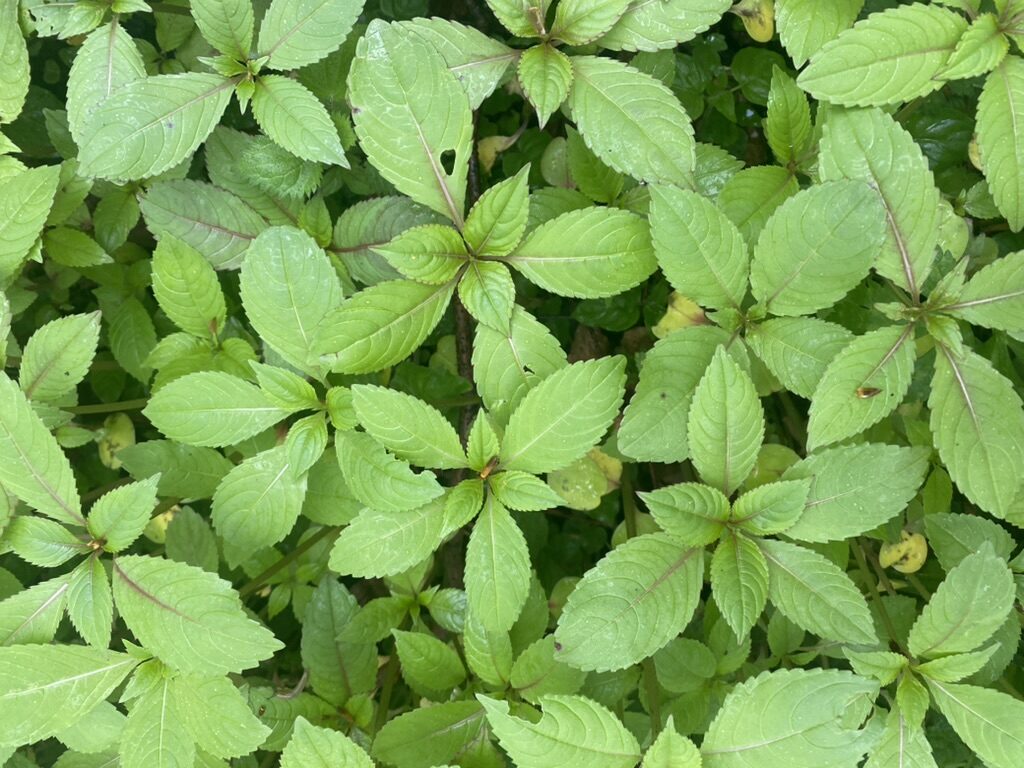
Himalayan balsam (Impatiens glandulifera) young shoots and tops are edible and can be incorporated into various dishes. However, specific nutritional data for these parts of the plant is not readily available but an estimate is included below.
Use a few leaves in salads. I’ve never tried cooking them
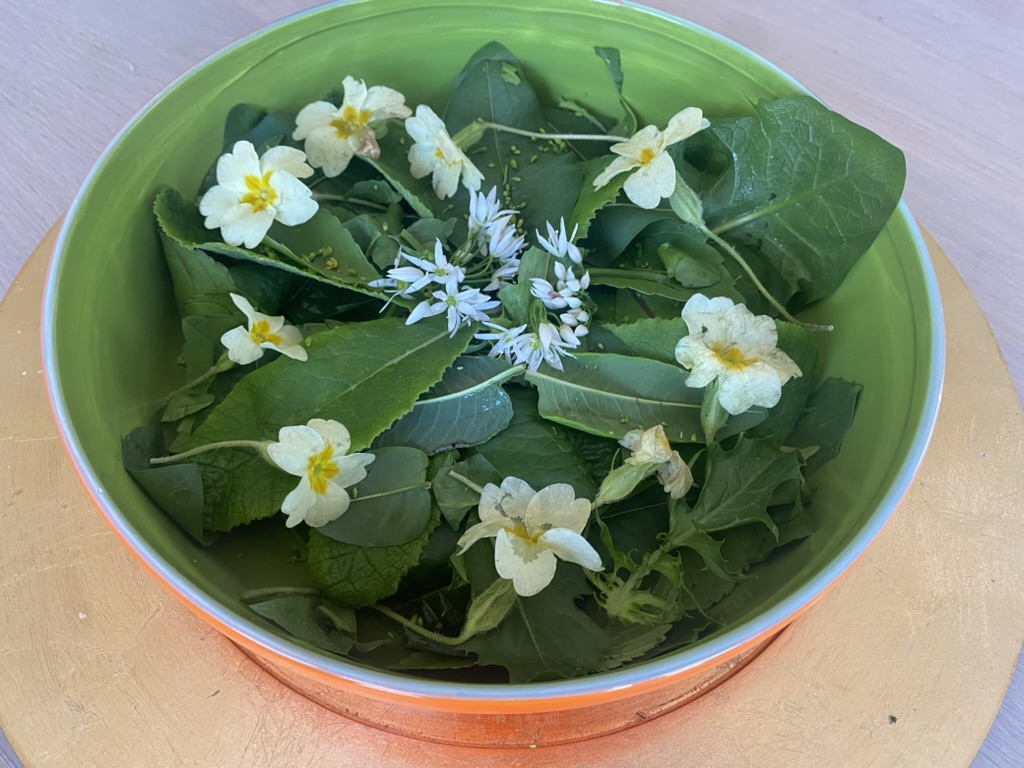
Photo: salad with Himalayan balsam, young dock leaves, dandelion leaves, primrose leaves and flowers and wild garlic flower top
⚠️ Safety Considerations
Calcium Oxalate Content:
Himalayan balsam contains calcium oxalates, which can be harmful in large quantities
Cooking the plant thoroughly can help reduce these compounds
Health Conditions:
Individuals with gout, kidney stones, arthritis, or similar conditions should avoid consuming this plant
Invasive Species:
Himalayan balsam is considered an invasive species in many regions
Foraging should be done responsibly to prevent its spread
🌿 Nutritional Overview (Young Shoots & Tops)
Nutrient | Estimated Amount (per 100 g, Fresh)
Calories ~30–40 kcal
Carbohydrates ~6–8 g
Protein ~2–3 g
Fat ~0.1–0.3 g
Fibre ~3–5 g
Vitamin C Moderate
Calcium Moderate to High
Iron Moderate
Note: These values are estimated based on general profiles of leafy greens and the limited information available on Himalayan balsam
Seeds
Himalayan balsam seeds are one of the tastiest and safest parts of the plant to forage — and they’re actually quite versatile in the kitchen. They’re small, black or dark brown when ripe, and have a mild, nutty flavour — somewhat like sunflower seeds or walnuts.
How to Harvest the Seeds
Pick in late summer to early autumn (August–October, depending on region).
The seedpods are explosively dehiscent — they burst open when touched, so:
Cup your hand around them and gently pinch the base.
Or place a bag or jar around them to catch the seeds.
Ripe seeds are black or dark brown; avoid green ones (they’re unripe and slightly bitter).
How to Use Himalayan Balsam Seeds
Raw
As a snack — eat straight after harvesting (they’re mild and pleasant).
Sprinkle onto salads or granola.
Mix into yogurt or fruit bowls.
Toasted/Roasted
Toast in a dry pan for 2–3 minutes until they pop slightly and smell nutty.
Great sprinkled on:
Soups
Stir-fries
Rice or grain bowls
Ground
Grind into a coarse flour or meal:
Use to enrich bread, muffins, or pancakes (replace ~10–20% of flour).
Mix with oats and seeds for homemade energy bars.
Sweet uses
Stir into melted chocolate and spoon into molds for a nutty crunch.
Combine with honey and oats as a topping for baked fruits.
Use as a wild foraged garnish on cakes or truffles.
Flavour Pairings
Honey
Dark chocolate
Wild fruits (blackberries)
Toasted oats
Spices like cinnamon or nutmeg
The more seeds you harvest, the more you will stop this invasive species spreading!