
Stinging Nettle (Urtica dioica)
Few wild plants are as instantly recognisable—or as unfairly feared—as the Stinging Nettle. Common along paths, riverbanks, and woodland edges, nettles are a forager’s classic spring crop: one of the first green shoots of the year and one of the most nutrient-rich. Beneath its sting lies a mild, spinach-like flavour and a long tradition of culinary and herbal use.
Identification
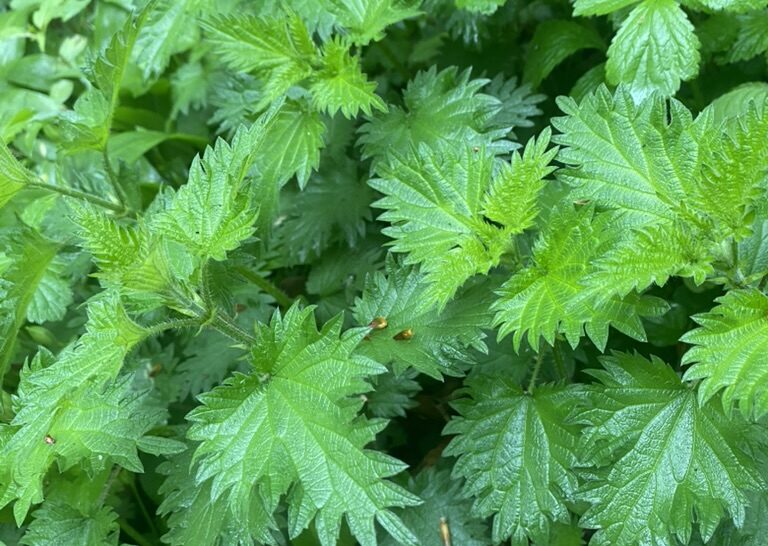
Nettles grow upright in clumps up to 1.5 m tall, with serrated heart-shaped leaves and fine stinging hairs (trichomes) that release formic acid and histamine when touched. The stems are square in cross-section, and tiny greenish flowers form in drooping clusters from the upper leaf joints.
They favour nitrogen-rich soils—often near human habitation, compost heaps, and woodland clearings.
Culinary Uses
The young top leaves (top 4–6 cm) are the tenderest and best for food. Once blanched, they taste like mild spinach with a deeper, nutty undertone.
Ways to use nettles:
Soups and broths – classic nettle soup with potato and onion.
Omelettes and pasta – use as you would spinach.
Tea – a simple infusion of dried or fresh leaves.
Pestos and purées – blend with olive oil, nuts, and lemon.
Nutritional and Traditional Medicinal Reputation
Nettles are rich in minerals (iron, calcium, magnesium), vitamin C, and plant protein, making them a traditional “spring tonic” to restore vitality after winter.
Herbal traditions also attribute nettles with:
Anti-inflammatory properties (especially for joints).
Diuretic effects that may help flush the urinary system.
Use as a scalp and hair rinse for dandruff and shine.
Scientific studies continue to explore its potential for managing inflammation and allergies, though evidence remains preliminary.
Harvesting
Wear gloves when harvesting. The sting disappears completely once the plant is cooked, steeped, or dried.
Cut young tops before flowering (April–June). Always use gloves and scissors.
Avoid older summer leaves, which become coarse and can develop gritty calcium crystals.
Recipes
Nettle Tea
1 tsp dried leaf per cup, steep 10 minutes.
Powder:
grind dried leaves to mix into smoothies or soups.
How to Dry Nettles
Drying is the best way to preserve nettles for tea or winter use.
Clean:
Shake off insects; rinse lightly if needed and pat dry thoroughly.
Air-dry (traditional method):
Tie small bunches together by the stems and hang upside down in a warm, airy, shaded place.
Alternatively, spread leaves on a mesh rack or paper towel in a single layer.
Turn daily until crisp and brittle (usually 3–5 days).
Dehydrator:
Set temperature to 35–45 °C (95–115 °F).
Dry for 2–6 hours until the leaves crumble easily.
Store:
Strip dried leaves from stems and keep in airtight jars, away from light and moisture.
Shelf life: about a year.
Nutrition
Here’s the approximate nutritional breakdown for fresh nettle leaves per 100 g, based on available UK and USDA data. Nettles are impressively nutritious, especially when fresh or lightly cooked.
Here’s the approximate nutritional breakdown for fresh nettle leaves per 100 g, based on available UK and USDA data. Nettles are impressively nutritious, especially when fresh or lightly cooked.
🌿 Nettle Leaves – Nutrition per 100 g (Fresh)
| Nutrient | Amount |
|---|---|
| Calories | 42 kcal |
| Carbohydrates | 7.5 g |
| Protein | 2.7 g |
| Fat | 0.1 g |
| – Saturated Fat | 0.01 g |
| – Polyunsaturated Fat | 0.04 g |
| – Monounsaturated Fat | 0.01 g |
| – Trans Fat | 0 g |
| Cholesterol | 0 mg |
| Sodium | 4 mg |
| Potassium | 334 mg |
| Fibre | 6.9 g |
| Sugar | 0.2 g |
| Vitamin A | 2010 IU |
| Vitamin C | 333 mg |
| Calcium | 481 mg |
| Iron | 4.4 mg |
Notes:
Cooking reduces Vitamin C but makes nutrients like iron more bioavailable.
High in antioxidants, minerals, and natural anti-inflammatories.
Great in soups, teas, pestos, and more once blanched (removes sting).
Here’s the nutritional breakdown for cooked nettle leaves per 100 g, typically after boiling or steaming and draining. Cooking reduces volume and softens the sting, but it also slightly alters the nutrient profile — especially for heat-sensitive vitamins.
🌿 Cooked Nettle Leaves – Nutrition per 100 g (Boiled, Drained)
| Nutrient | Amount |
|---|---|
| Calories | 29 kcal |
| Carbohydrates | 5.5 g |
| Protein | 2.4 g |
| Fat | 0.1 g |
| – Saturated Fat | 0.01 g |
| – Polyunsaturated Fat | 0.02 g |
| – Monounsaturated Fat | 0.01 g |
| – Trans Fat | 0 g |
| Cholesterol | 0 mg |
| Sodium | 3 mg |
| Potassium | 280 mg |
| Fibre | 5.0 g |
| Sugar | 0.2 g |
| Vitamin A | ~1300 IU |
| Vitamin C | ~70 mg |
| Calcium | ~290 mg |
| Iron | ~2.7 mg |
Notes:
Vitamin C drops significantly with cooking but still remains decent.
Calcium and iron are still abundant — in fact, slightly more bioavailable once cooked.
Great as a spinach substitute in soups, curries, omelettes, or pasta.
]Here’s a side-by-side comparison of the nutritional content of nettles per 100 g, both raw (fresh) and cooked (boiled and drained).
🌿 Nettles – Nutrition per 100 g
| Nutrient | Raw (Fresh) | Cooked (Boiled, Drained) |
|---|---|---|
| Calories | 42 kcal | 29 kcal |
| Carbohydrates | 7.5 g | 5.5 g |
| Protein | 2.7 g | 2.4 g |
| Fat | 0.1 g | 0.1 g |
| – Saturated Fat | 0.01 g | 0.01 g |
| – Polyunsaturated Fat | 0.04 g | 0.02 g |
| – Monounsaturated Fat | 0.01 g | 0.01 g |
| – Trans Fat | 0 g | 0 g |
| Cholesterol | 0 mg | 0 mg |
| Sodium | 4 mg | 3 mg |
| Potassium | 334 mg | 280 mg |
| Fibre | 6.9 g | 5.0 g |
| Sugar | 0.2 g | 0.2 g |
| Vitamin A | 2010 IU | ~1300 IU |
| Vitamin C | 333 mg | ~70 mg |
| Calcium | 481 mg | ~290 mg |
| Iron | 4.4 mg | ~2.7 mg |
🔍 Key Points:
Cooking reduces vitamin C and vitamin A, both heat-sensitive.
Iron, calcium, and potassium are still retained well.
Calories and carbs drop slightly due to water loss and dilution.
Cooked nettles are still highly nutritious and easier to digest and handle.