
Birch Polypore
Birch Polypore (Fomitopsis betulina, formerly Piptoporus betulinus) is a distinctive bracket fungus that grows almost exclusively on birch trees, often appearing as smooth, pale grey or buff domes that turn browner with age. It usually grows singly rather than in clusters, and its surface feels leathery while fresh, becoming hard and corky when dry. Historically, it’s been valued for its medicinal and practical uses: it was carried by Ötzi the Iceman over 5,000 years ago, likely for both tinder and medicine. Modern research suggests it contains betulinic acid and triterpenes, compounds being studied for potential anti-inflammatory, antimicrobial, and immune-supporting effects. The fungus has also been used traditionally as a natural wound dressing and intestinal cleanser.
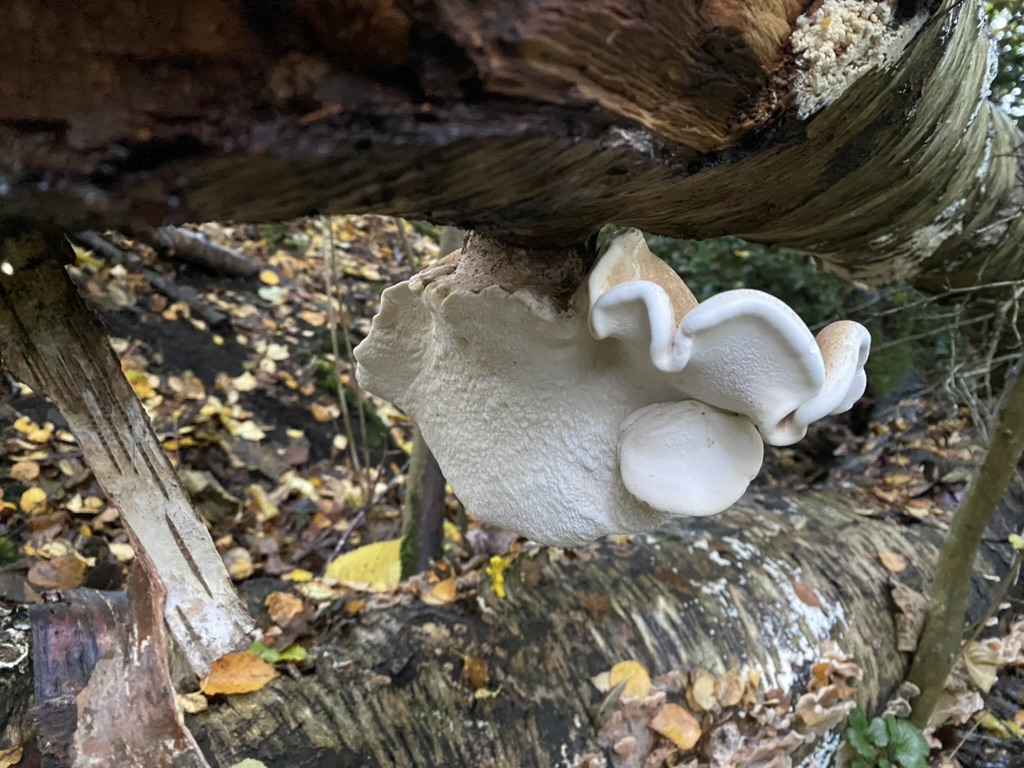
Birch Polypore tea
To make a Birch Polypore tea, slice or break the fresh or dried brackets into small pieces, then simmer gently for 20–30 minutes (about 2–3 g per cup of water). The tea has a bitter, earthy flavour—some people add ginger or honey to soften the taste. The liquid can also be reduced to make a stronger decoction or frozen in ice-cube portions for later use.
Ötzi the Iceman
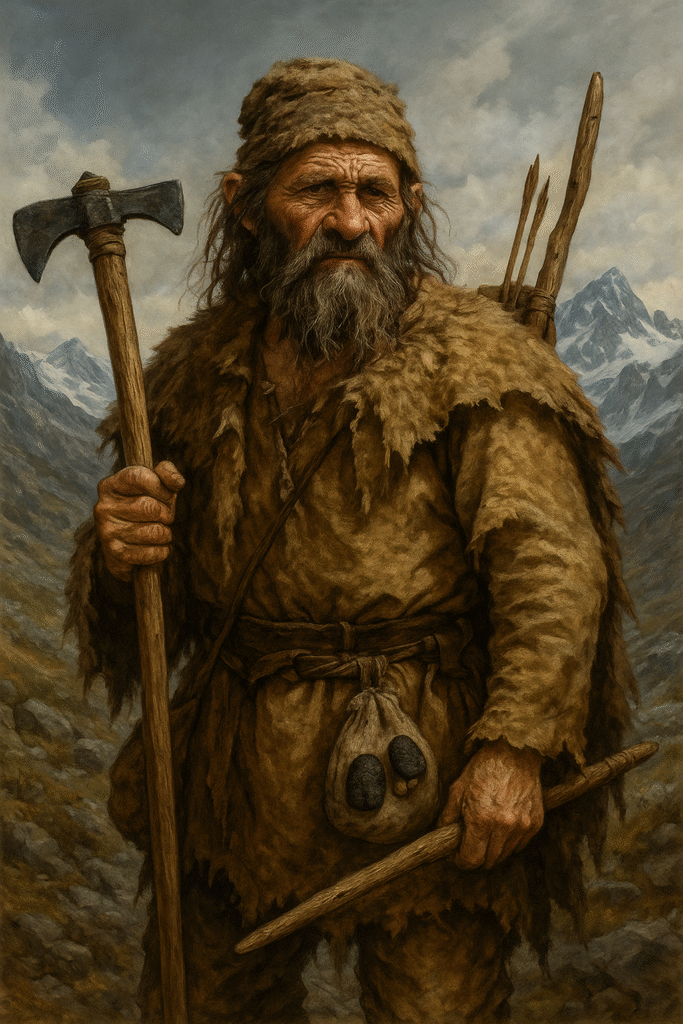
Ötzi the Iceman is a remarkable archaeological discovery, a naturally mummified man from around 3300 BCE, found in 1991 high in the Ötztal Alps (on the border between Austria and Italy). His body was preserved in ice for over 5,000 years, along with his clothing, tools, and personal belongings, giving an unprecedented glimpse into Copper Age life in Europe.
Ötzi was about 45 years old, 1.6 m (5 ft 3 in) tall, and weighed around 50 kg (110 lb). He suffered from worn joints, hardened arteries, and a healed rib fracture — but his death was violent: forensic analysis showed an arrowhead lodged in his shoulder and evidence of head trauma, suggesting he was ambushed.
His possessions were a survivalist’s kit: a copper axe, flint knife, bow and unfinished arrows, grass cloak, and a leather belt pouch. Most intriguingly, he carried two species of fungi:
Birch Polypore (Fomitopsis betulina), possibly used as a natural antibiotic, antiparasitic, or wound dressing. He also suffered from intestinal parasites, so this may have been a form of self-treatment.
Tinder fungus (Fomes fomentarius), also called Amadou, used to carry embers for fire-starting — an invaluable tool in the mountains.
Together, these items reveal a sophisticated understanding of natural medicine, metalwork, and survival techniques. Ötzi’s discovery transformed our understanding of prehistoric Europe — not as a primitive world, but as one where people already practiced herbal medicine, tool-making, and long-distance travel.
Drying Birch Polypore
Drying Birch Polypore (Fomitopsis betulina) is straightforward and helps preserve it for later use in teas, tinctures, or poultices. Here’s how to do it safely and effectively:
Select and clean – Harvest young, firm brackets from birch trees only (never from the ground). Avoid specimens that are very old, cracked, or heavily insect-eaten. Brush off debris and wipe gently with a damp cloth if needed, but don’t soak them.
Slice while fresh – Birch Polypore becomes very hard once dry, so cut it into thin slices (3–5 mm thick) while it’s still soft. A serrated knife works well.
Air dry – Lay the slices in a single layer on a mesh rack or paper towel in a warm, airy place out of direct sunlight. Turn them occasionally to ensure even drying. This method takes several days.
Dehydrator or oven – For faster drying, use a dehydrator at 40–45 °C (105–115 °F) or a fan oven on its lowest setting with the door slightly open. Dry until completely hard and brittle — they should snap, not bend.
Storage – Keep the fully dried pieces in an airtight jar or tin, stored in a cool, dark place. They’ll last for a year or more if kept dry.
The dried slices can later be simmered for tea or powdered for use in tinctures.
Note: I am not medically or dietetically qualified, and this information is for general interest only. Anyone considering using plants or wild fungi for health purposes should seek professional advice from a qualified practitioner.