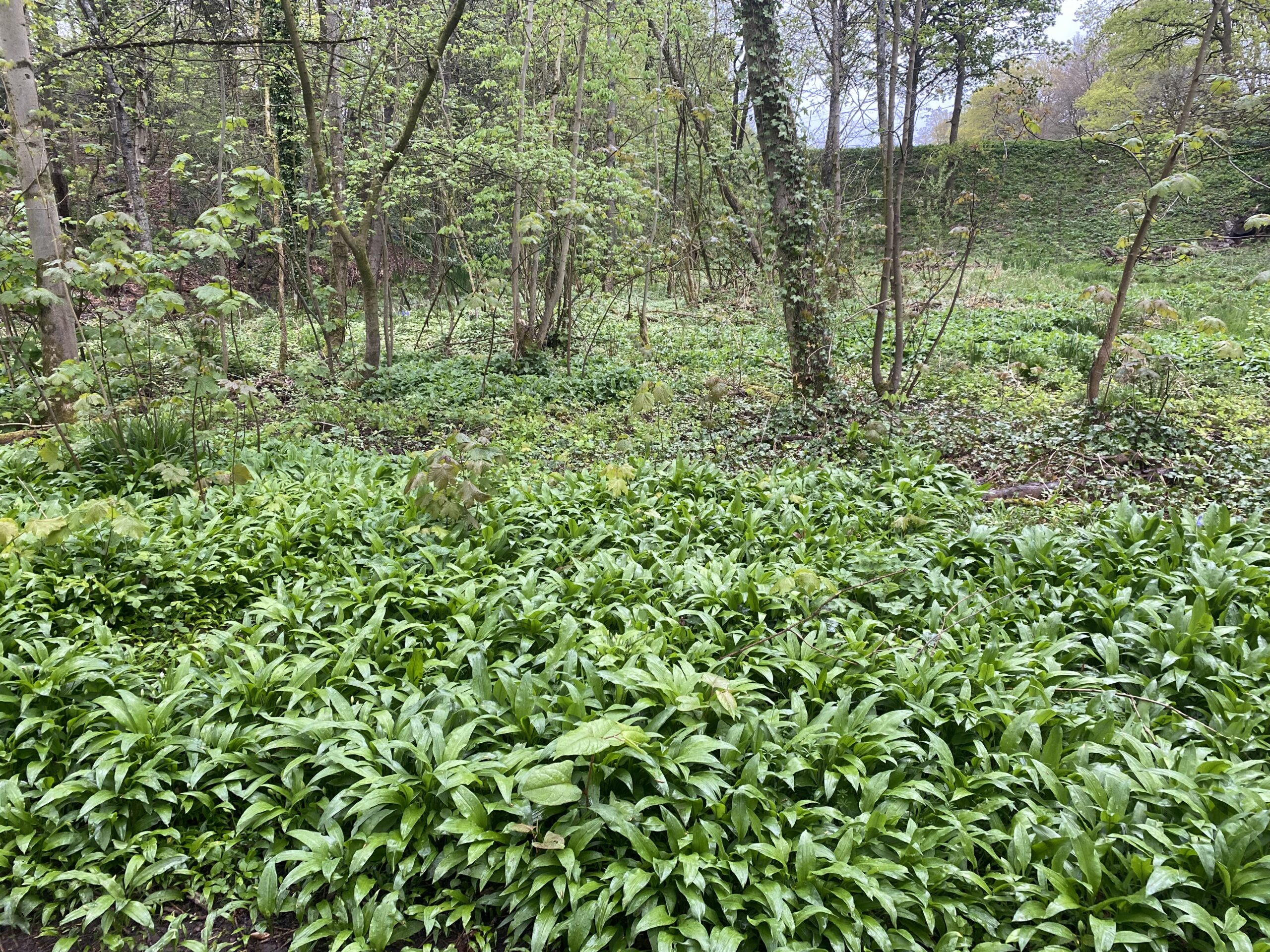
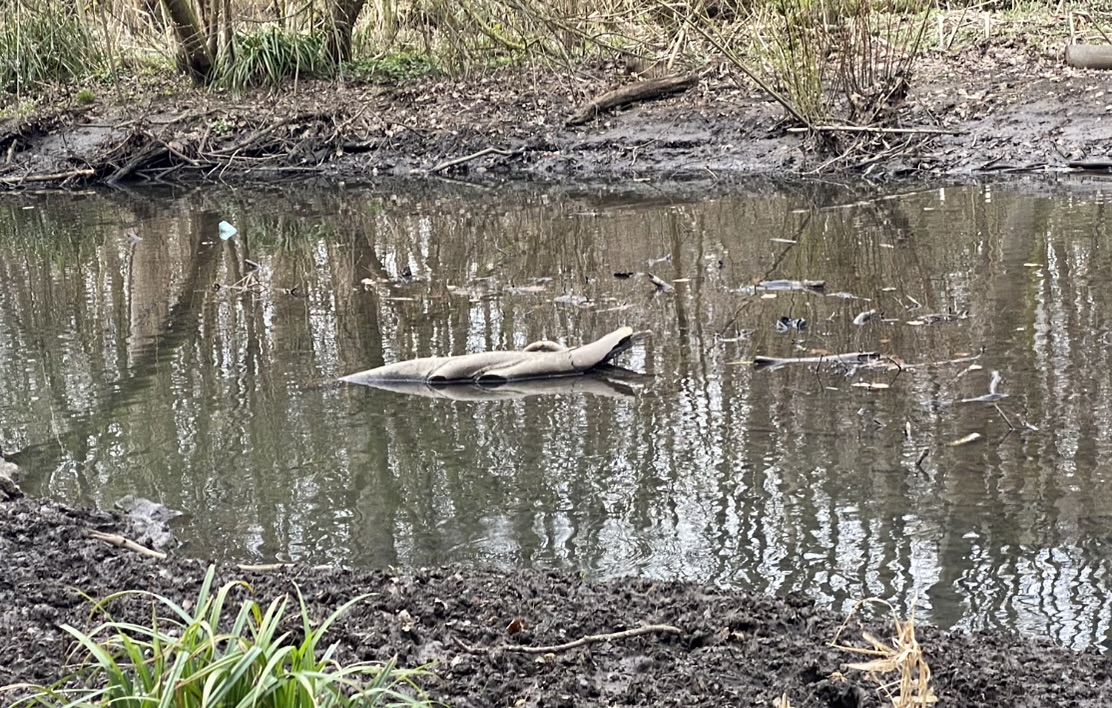
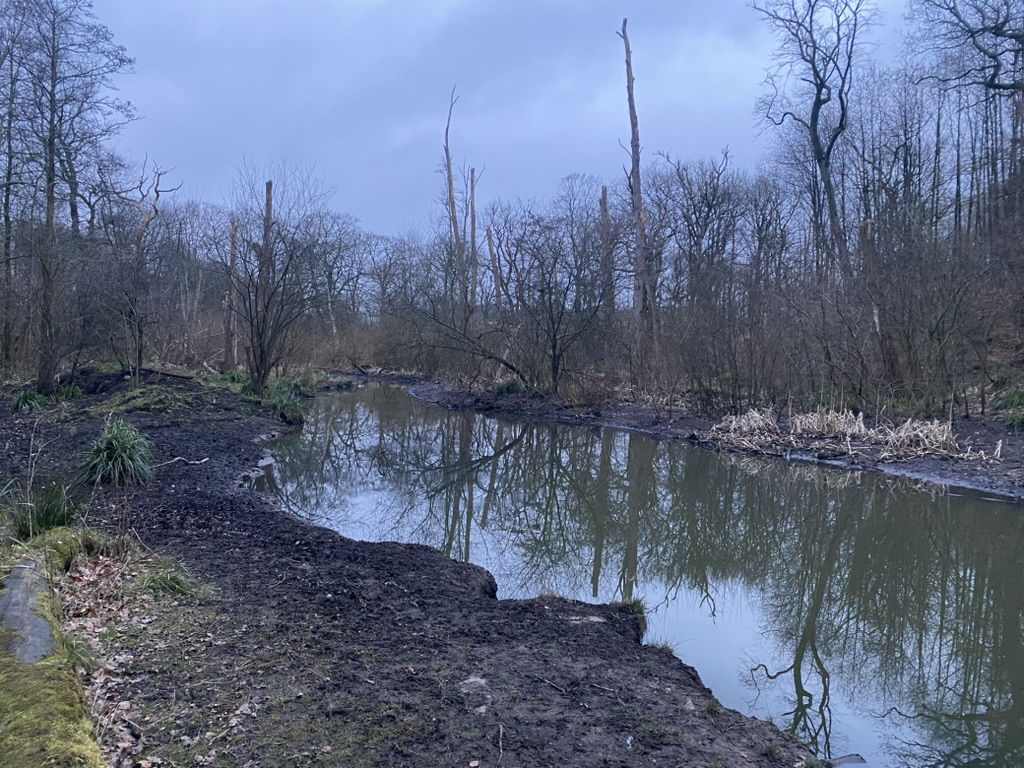
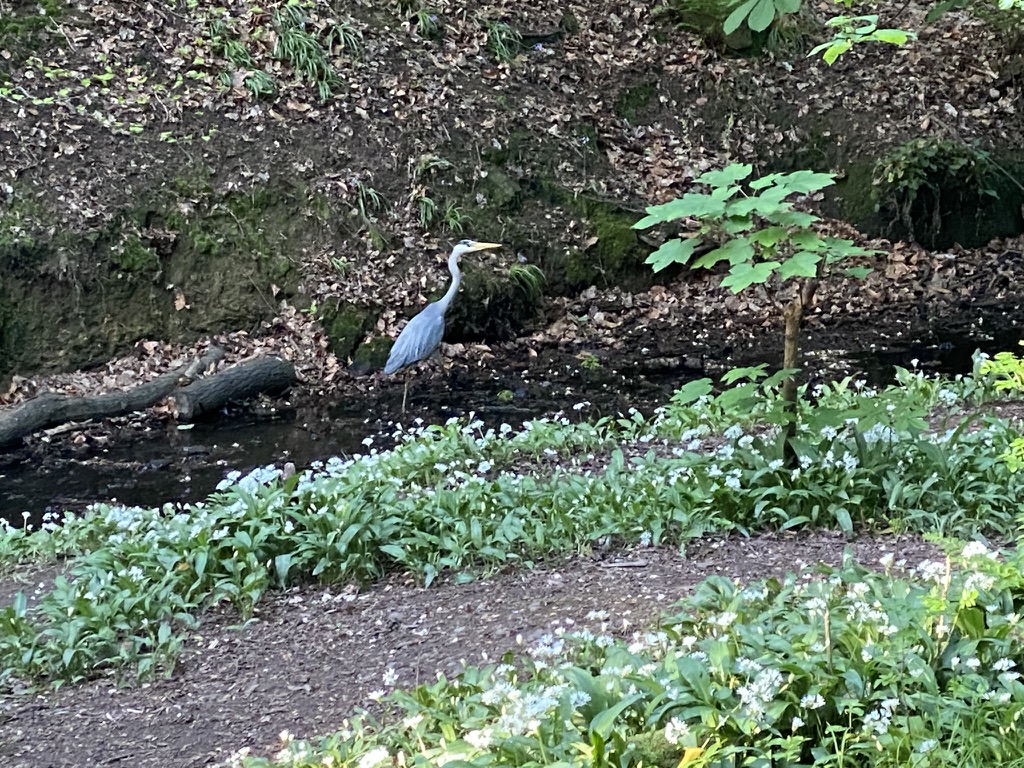
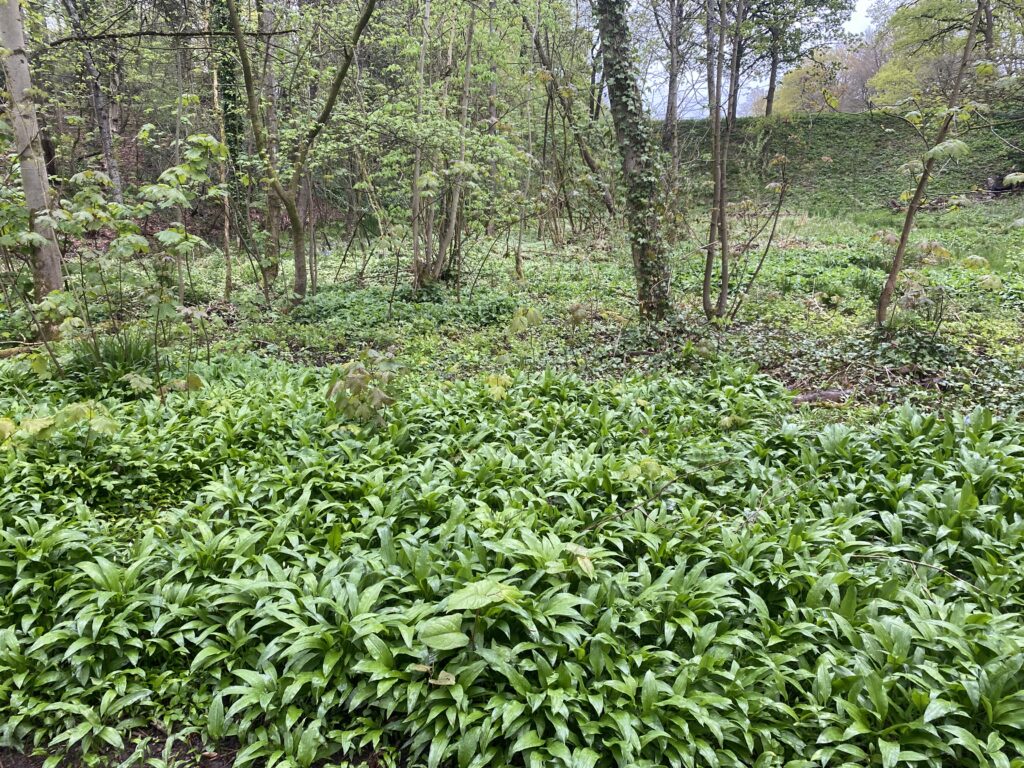
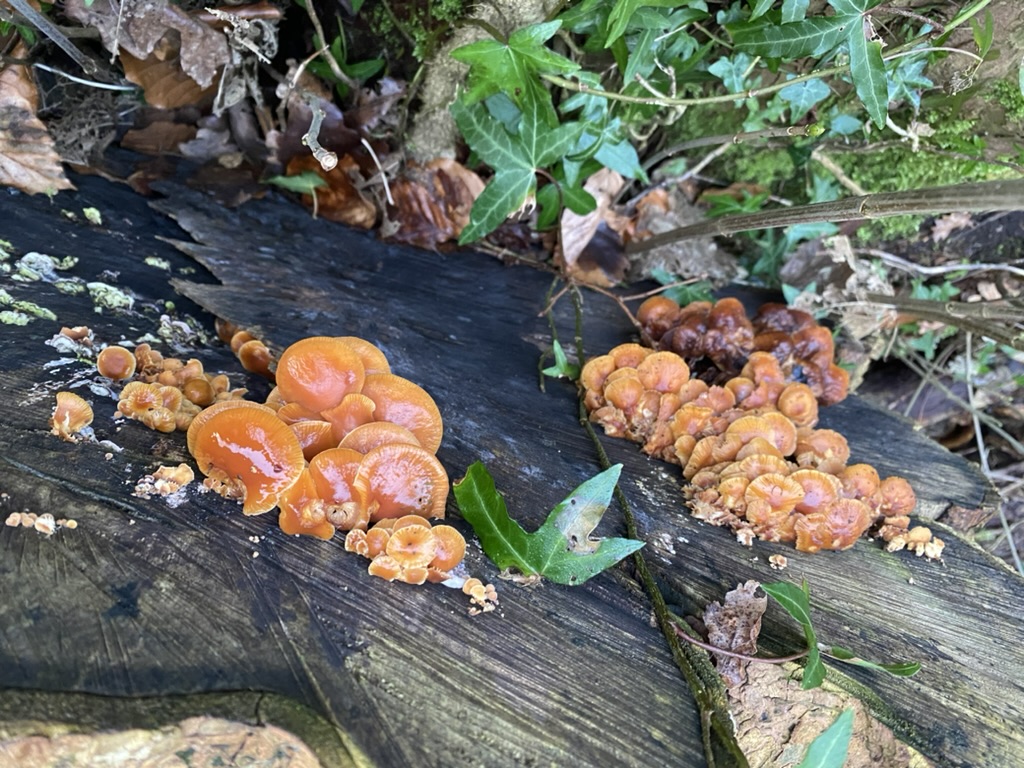
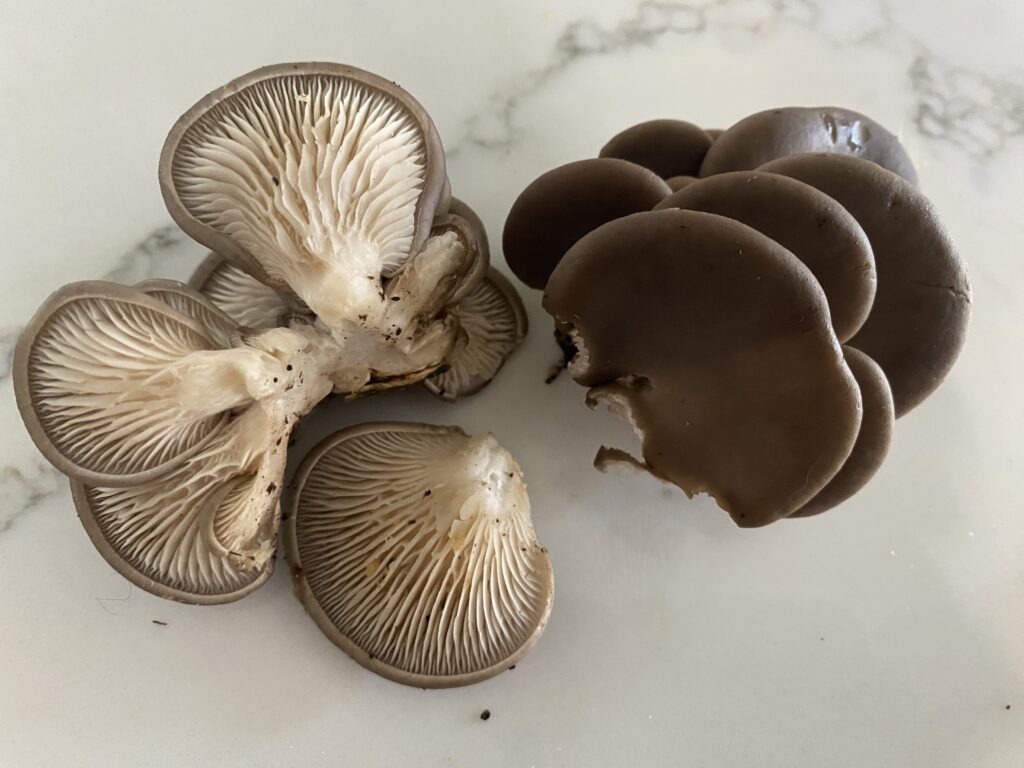
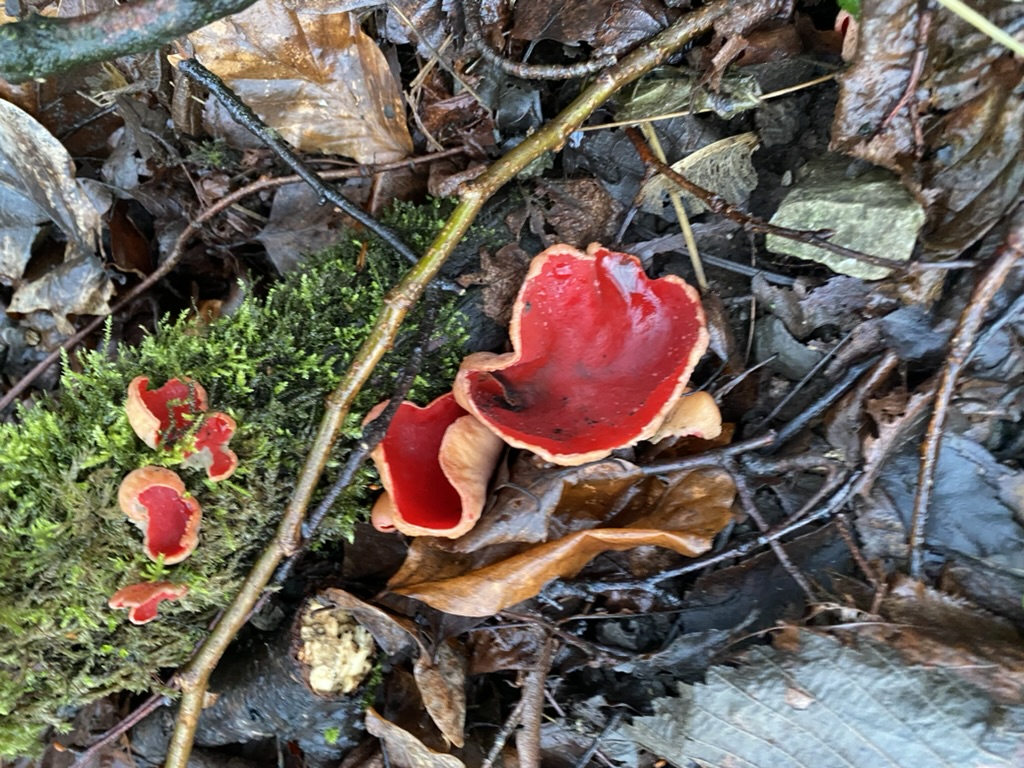
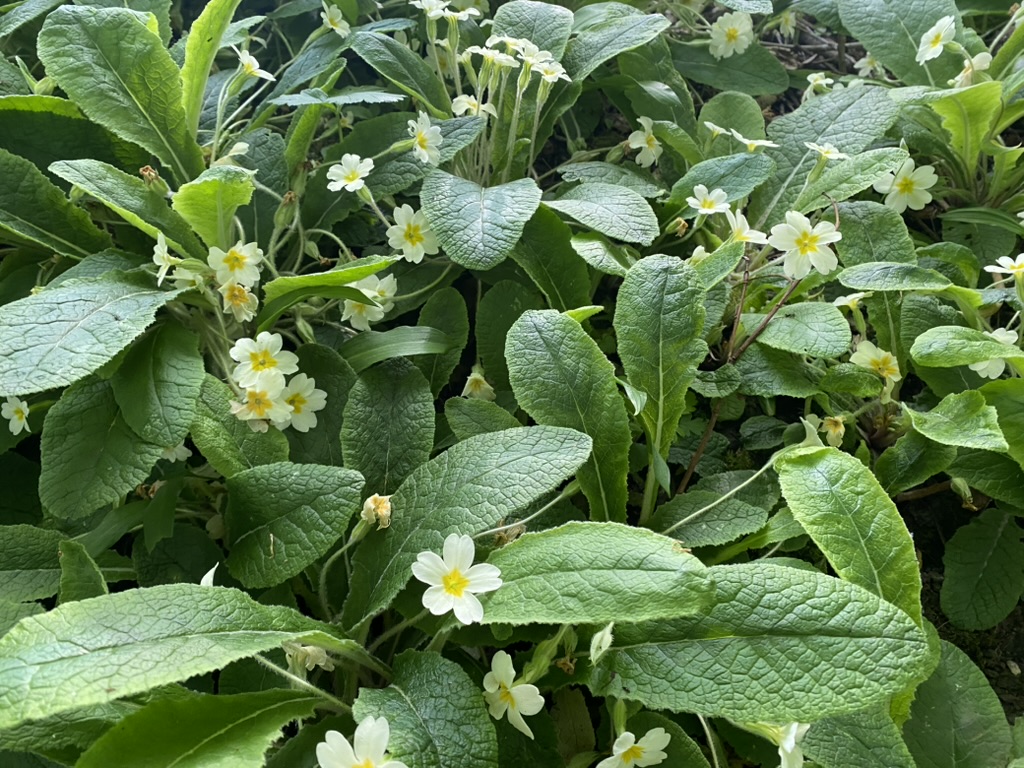
Worsley Woods was declared a Local Nature Reserve in 2006. The area is designated as a Site of Biological Importance, highlighting its significance for biodiversity within Greater Manchester
While not formally classified as a wetland, Worsley Woods contains several wetland habitat:
Kempnough Brook A stream that meanders through the woodland.
Old Warke Dam A historical reservoir
Wet Woodland Areas. Sections of the woods are wet woodland habitat, which are considered UK Priority Habitats. There are many fallen trees due to the area’s heavy clay soils, especially in combination with wet conditions and high winds. The trees often develop shallow roots since the roots struggle to penetrate compacted layers of clay.
The fallen trees and the wetlands support many types of plants and fungi.
Edible or usable
This is my foraging calendar all based on what I have seen in the woods right on my door step. In some cases there are link to recipes – none of which are “slice them up and fry them in butter”
Dates shown are when I have collected them. Some of the plants and mushrooms may be around at other times than those I have spotted.
This page should not be used as a primary source of identification of edible plants and fungi. There maybe errors here.
While these are inedible, some do have their uses and there are there are some who use them for their medicinal properties
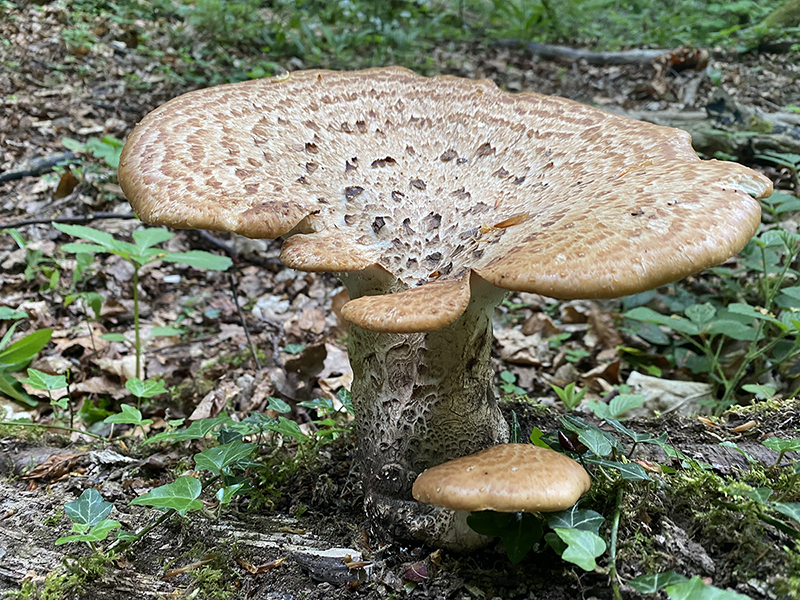
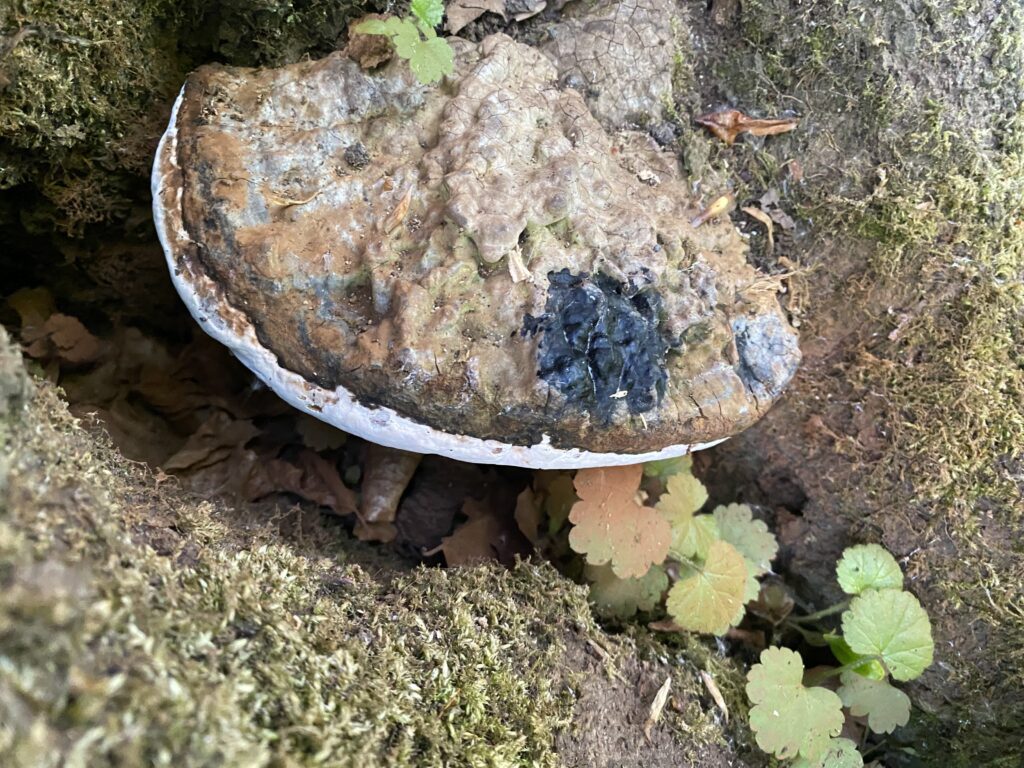
Artists Bracket
Ganoderma applanatum
Called as you can draw on it by scratching.
Hoof Fungus
All year
Kindling
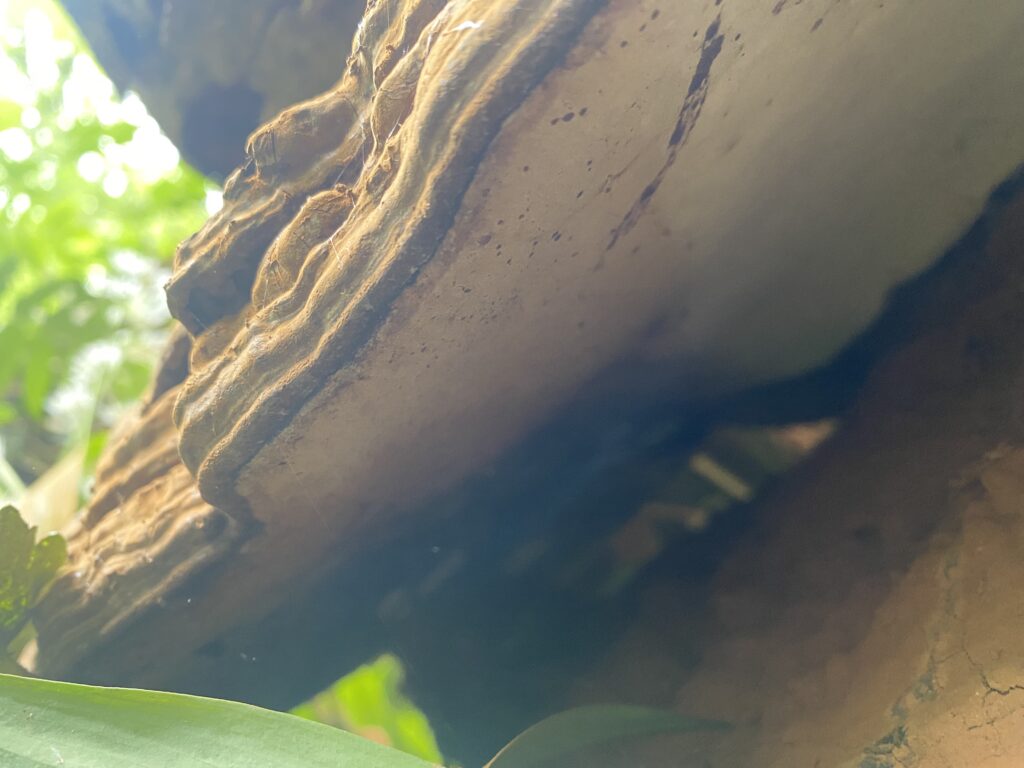
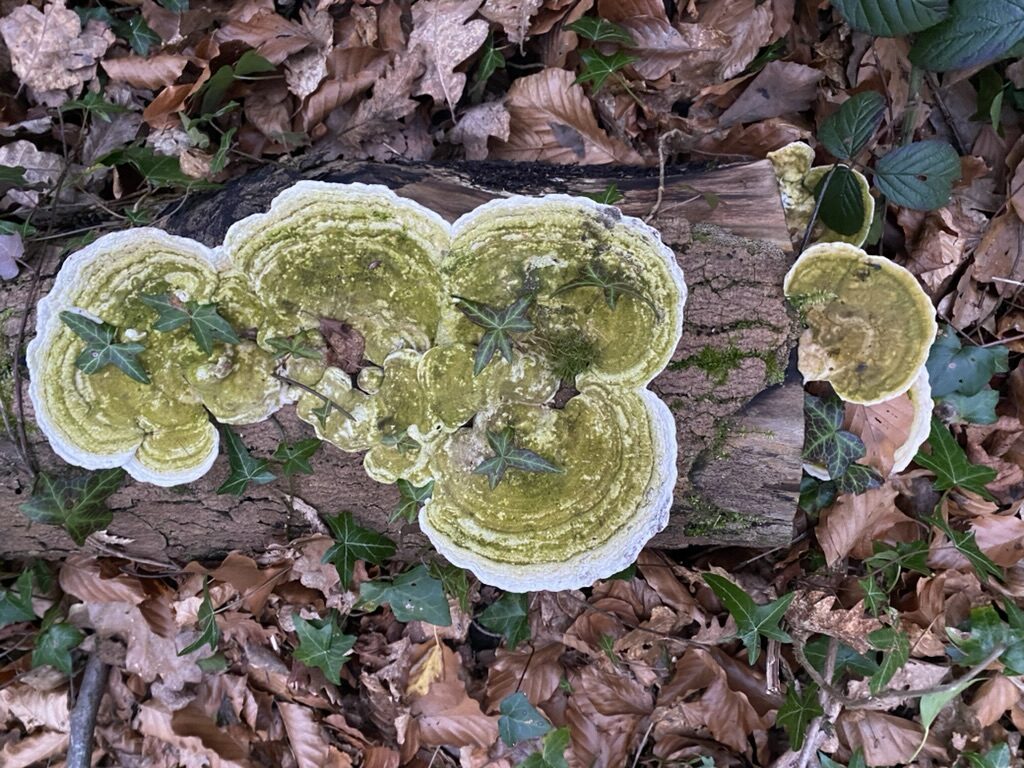
Lumpy Bracket
Tramates Gibbosa
The green colouring is algae on the surface
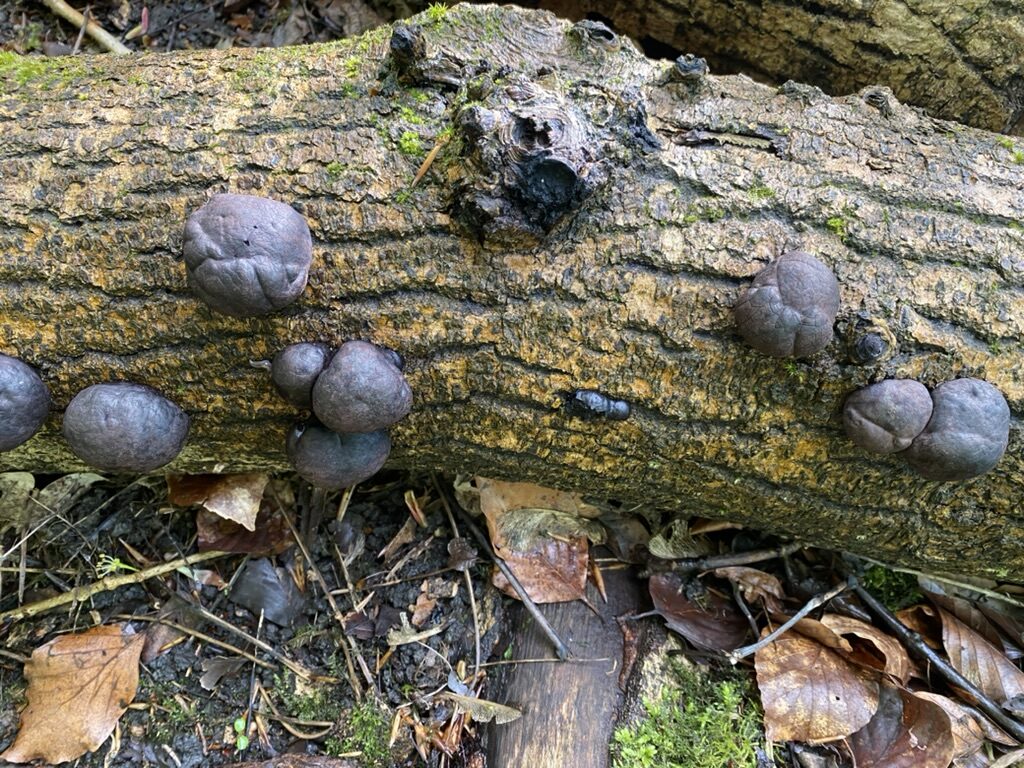
King Alfred's Cakes
May
Kindling
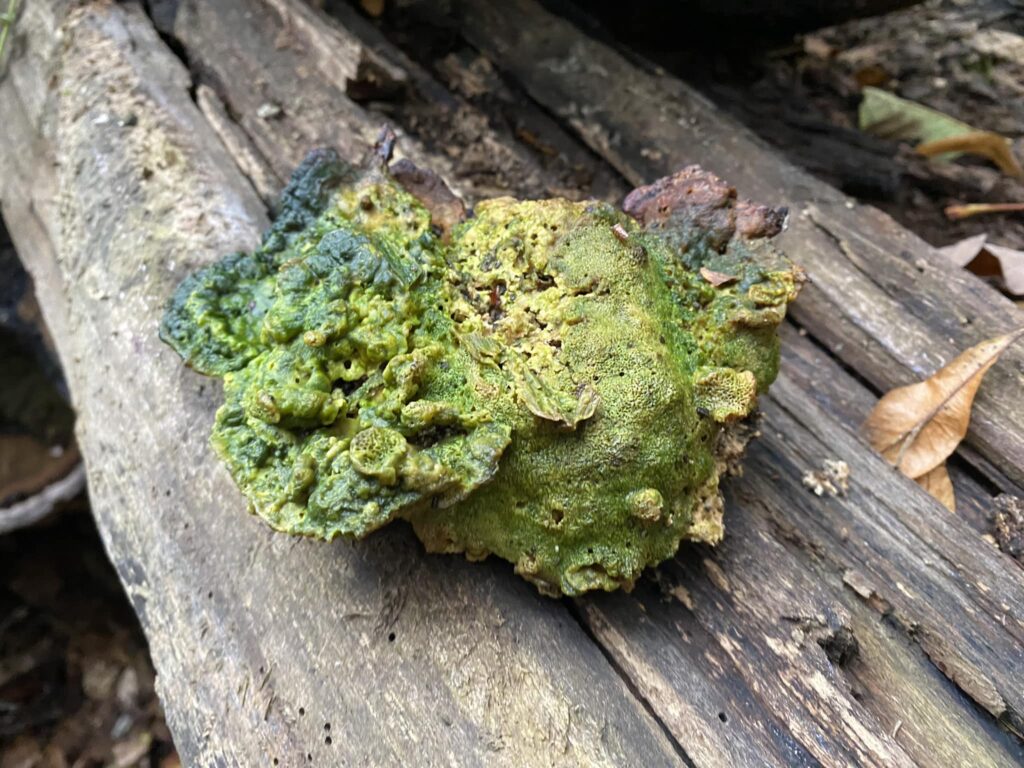
Mystery
October
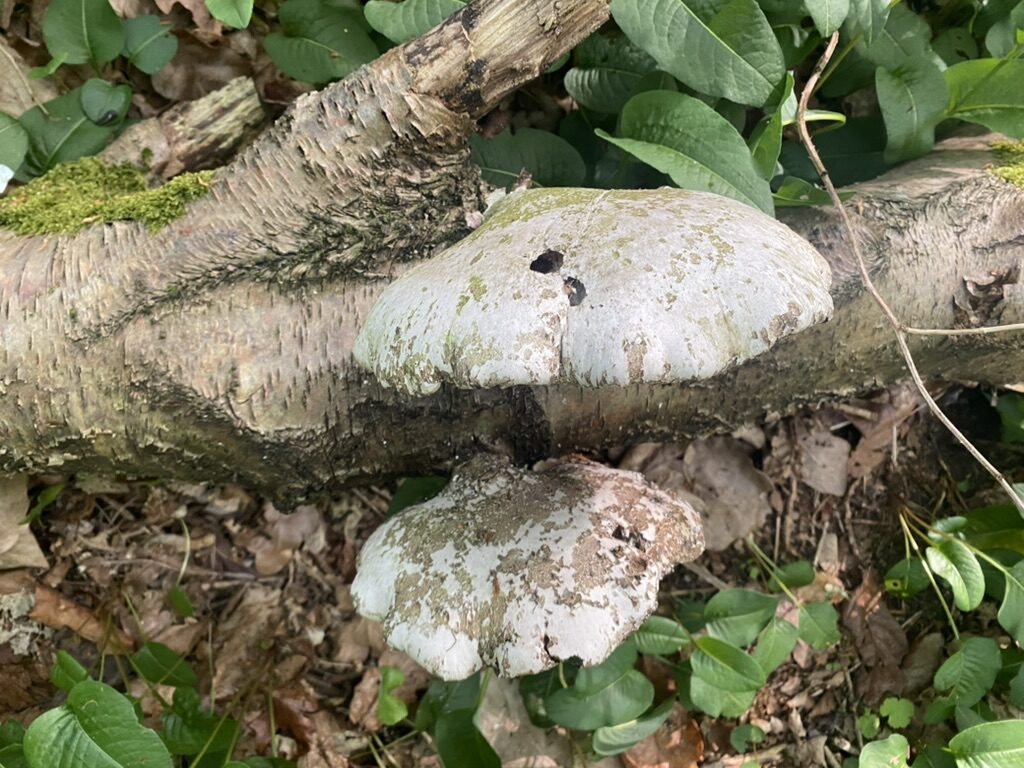
unknown bracket covered with a green crust-fungus
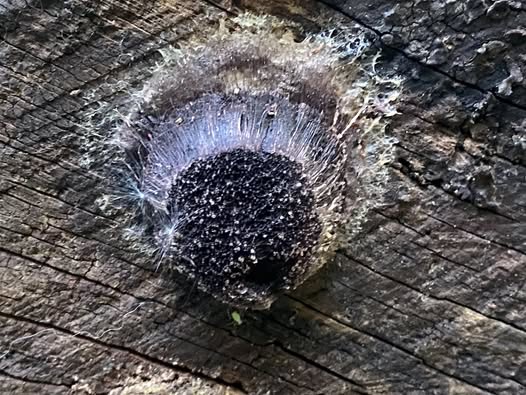
Symphytocarpus
May
24-48 hour life cycle
unknown
Dog Vomit Slime Mould
Fuligo septica
July
also known as “Scrambled Egg Slime”
Wrinkled Crust
Phlebia radiata
September
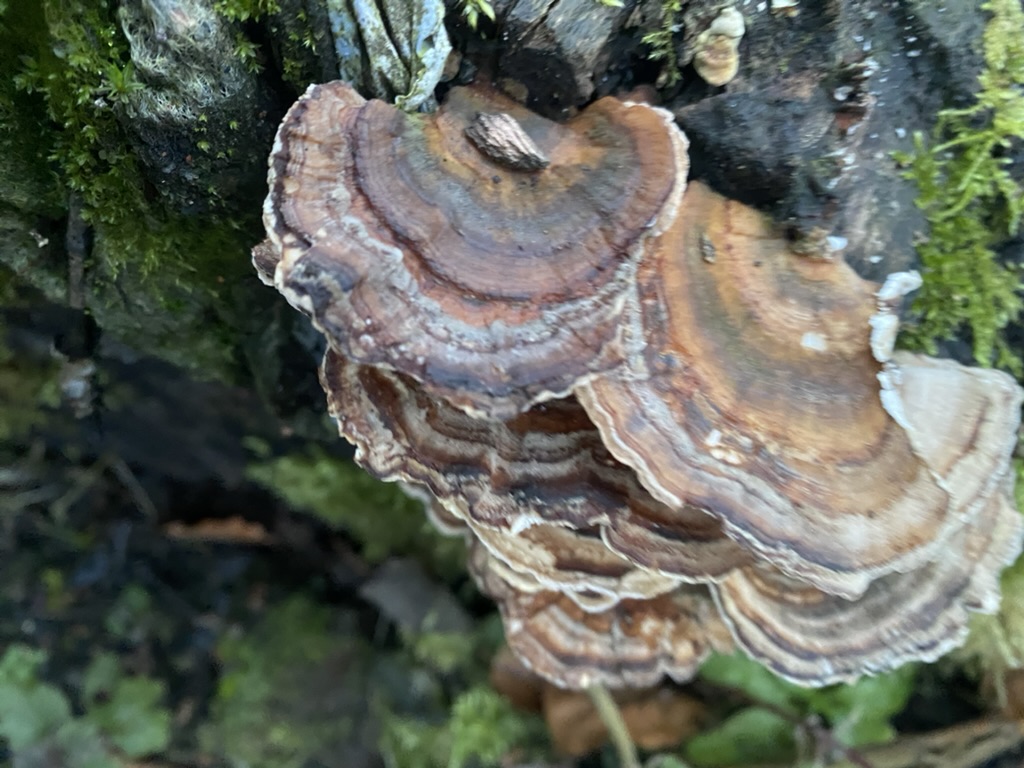
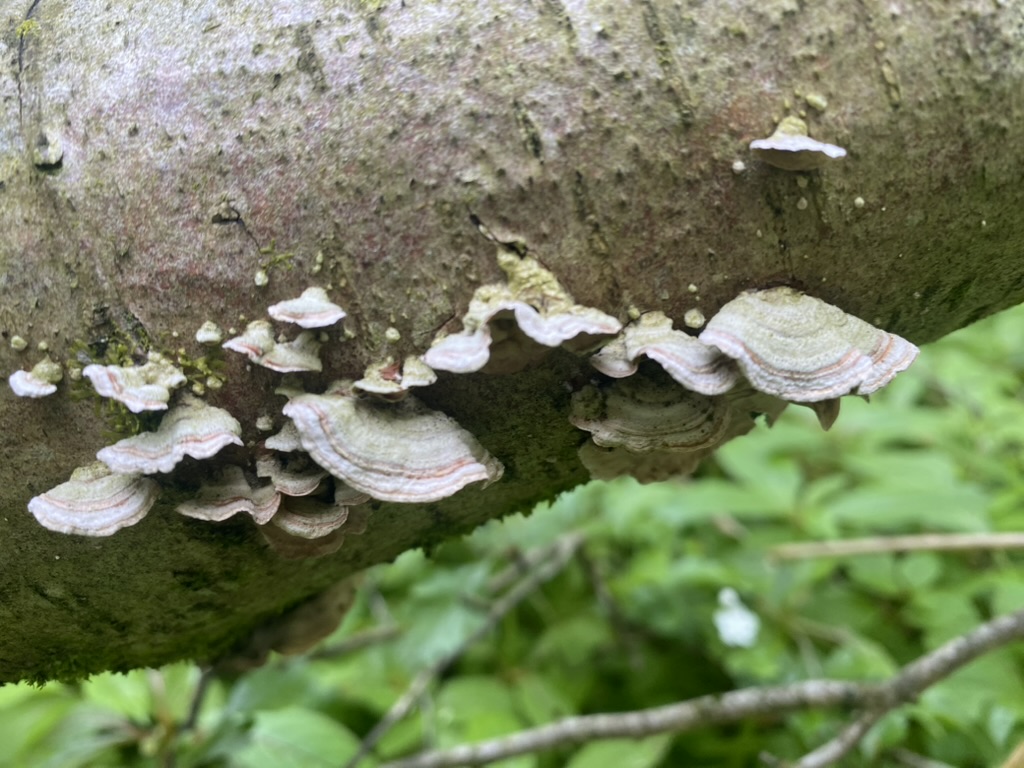
False Turkey Tail
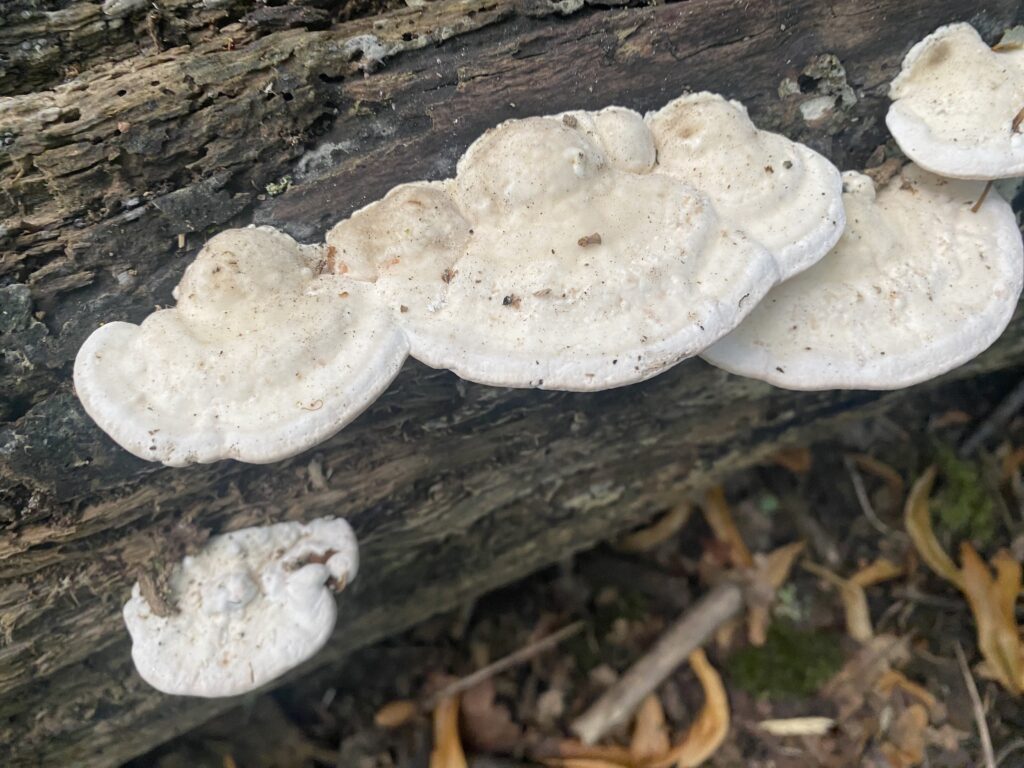
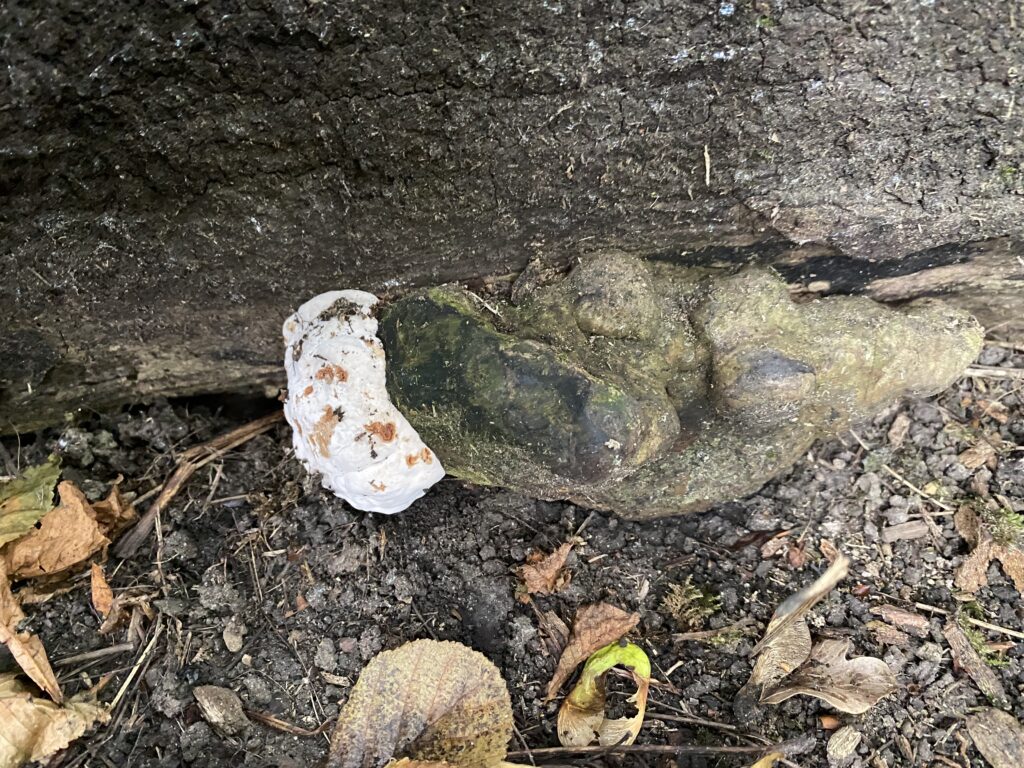
Milk-White Toothed Polypore
Irpex lacteus
September
Hairy Curtain Crust
Stereum hirsutum
October
Smoky Bracket/Grey Polypore
Bjerkandera adusta
October
Blackening Polypore
Meripilus giganteus
October
Causes white rot in roots when growing around live trees
White Brain Fungus
Exidia thuretiana
October
Inedible Funghi
There is no real distinction between toadstools and mushrooms. General usage is Mushrooms=Edible; Toadstools=inedible. Where there are risks of misidentification, I am including possibly edible mushrooms with the inedible. It’s not worth taking the risk.
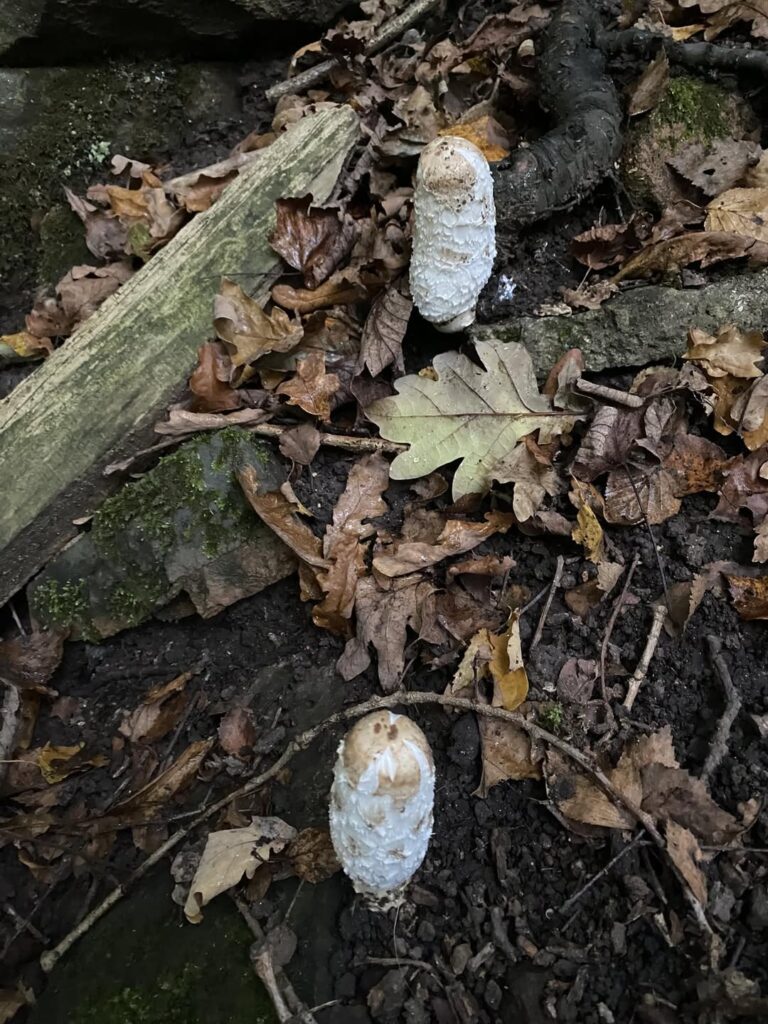
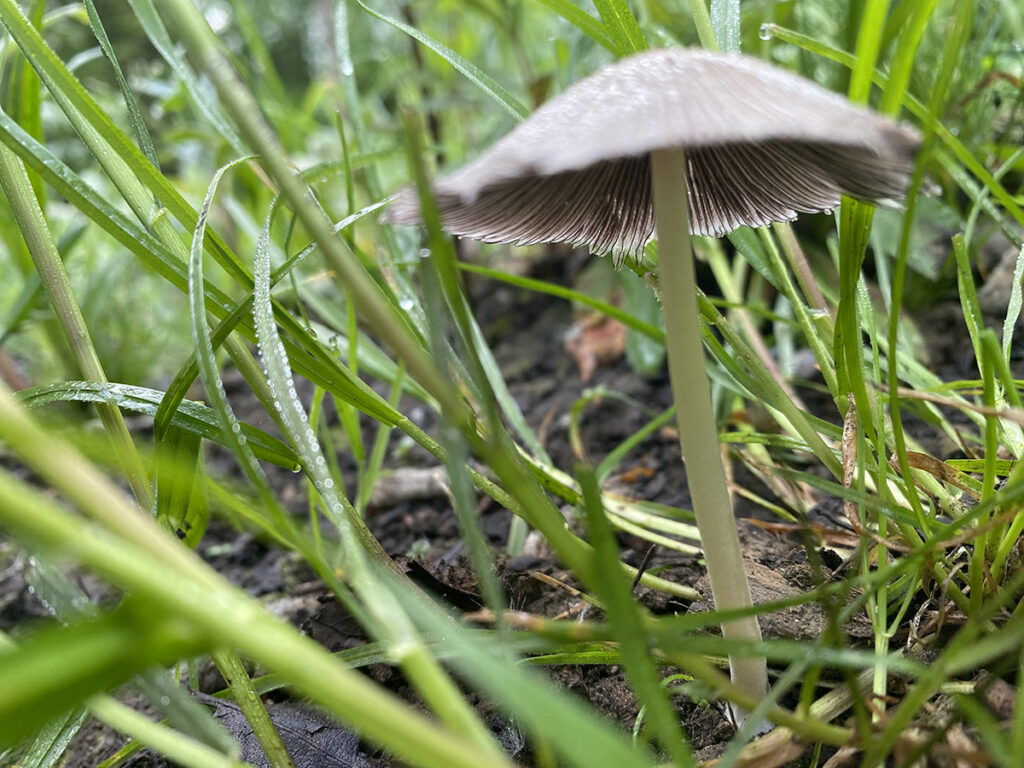
Glistening Inkcap
February/March
Can be confused with more poisonous relatives,
Pleated Inkcap
appear late spring and autumn
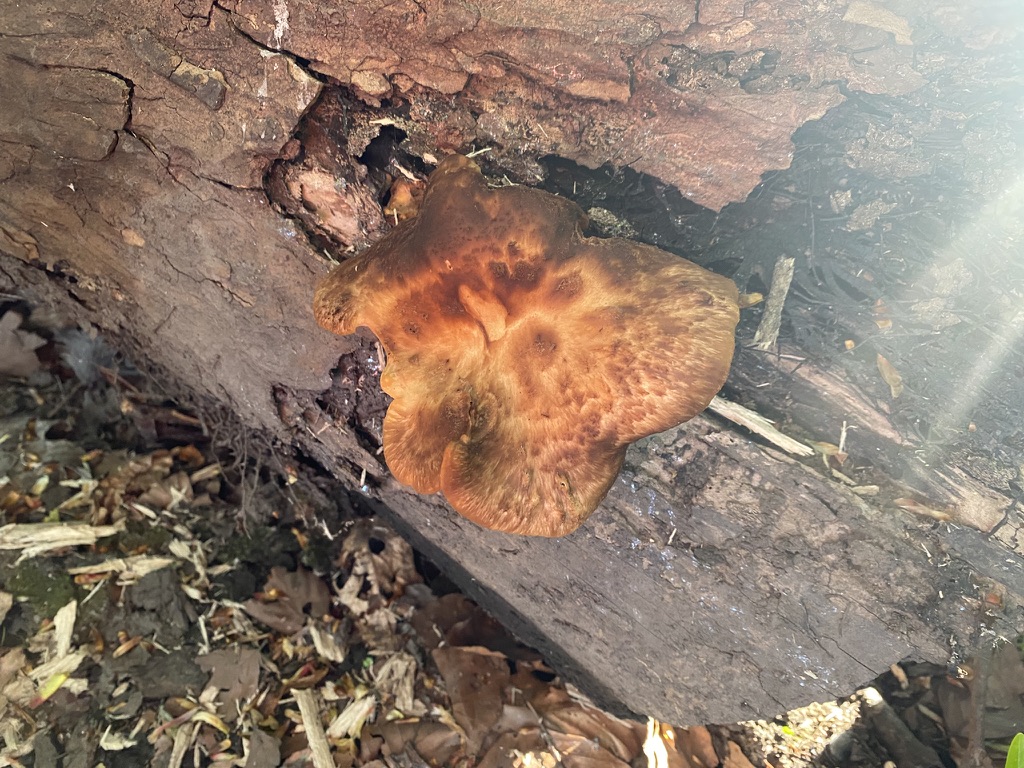
Polyporus Tuberaster
May
Do not confuse with Dryad’s Saddle. Not recommended for consumption.
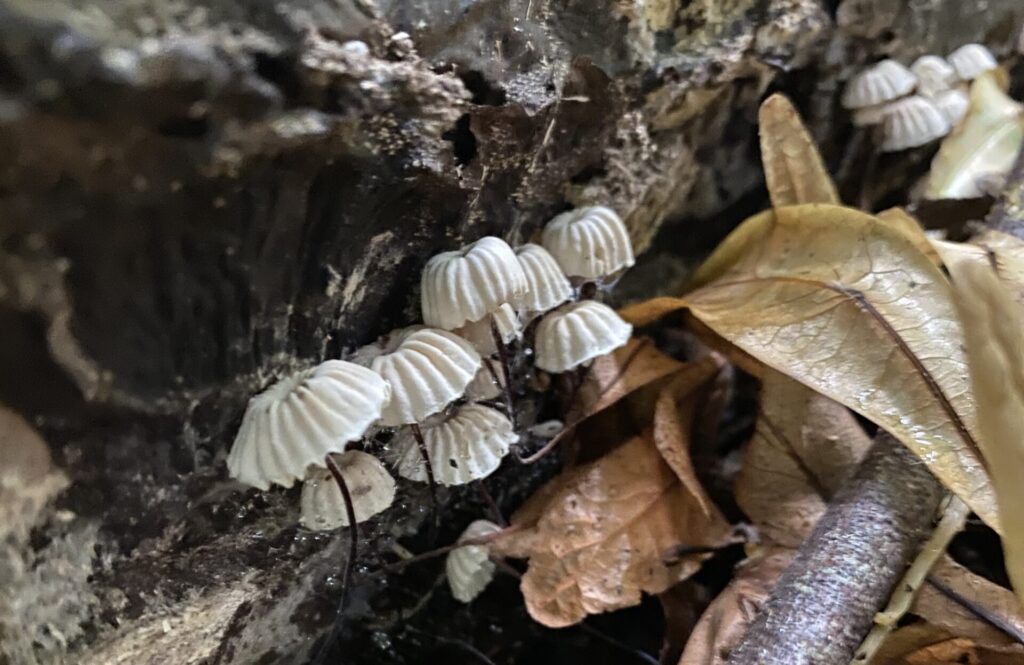
Collared Parachute
Marasmius rotula
July
Marasmius rotula
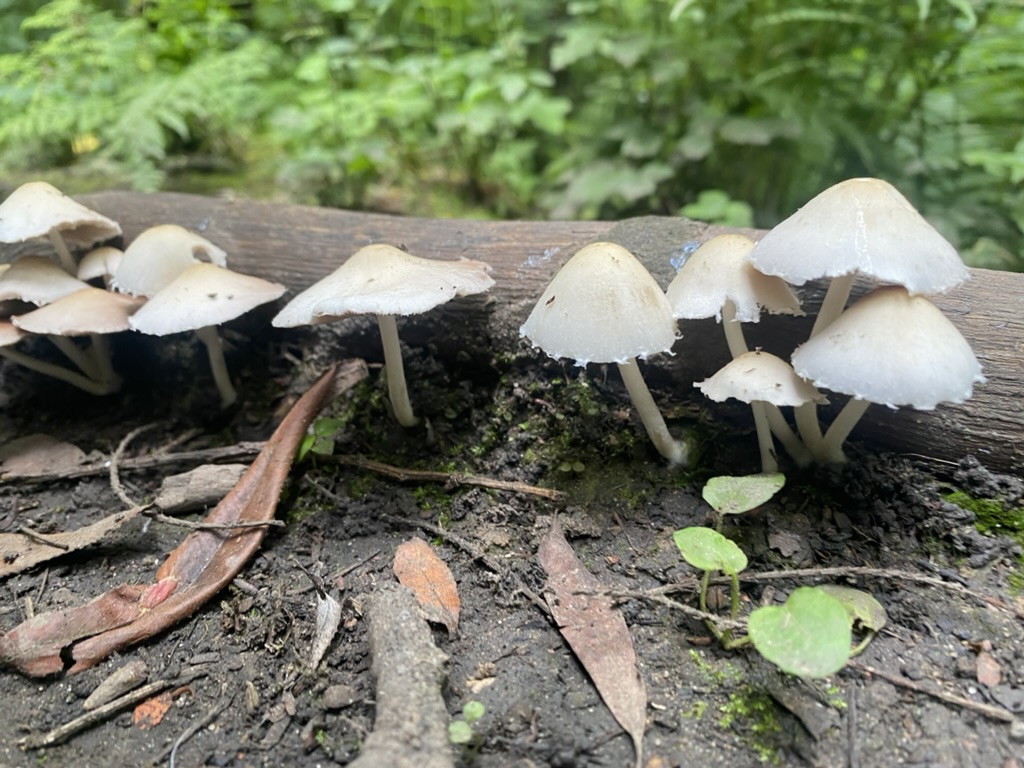
Pale Brittlestem
July
Fairy Ink Cap
July
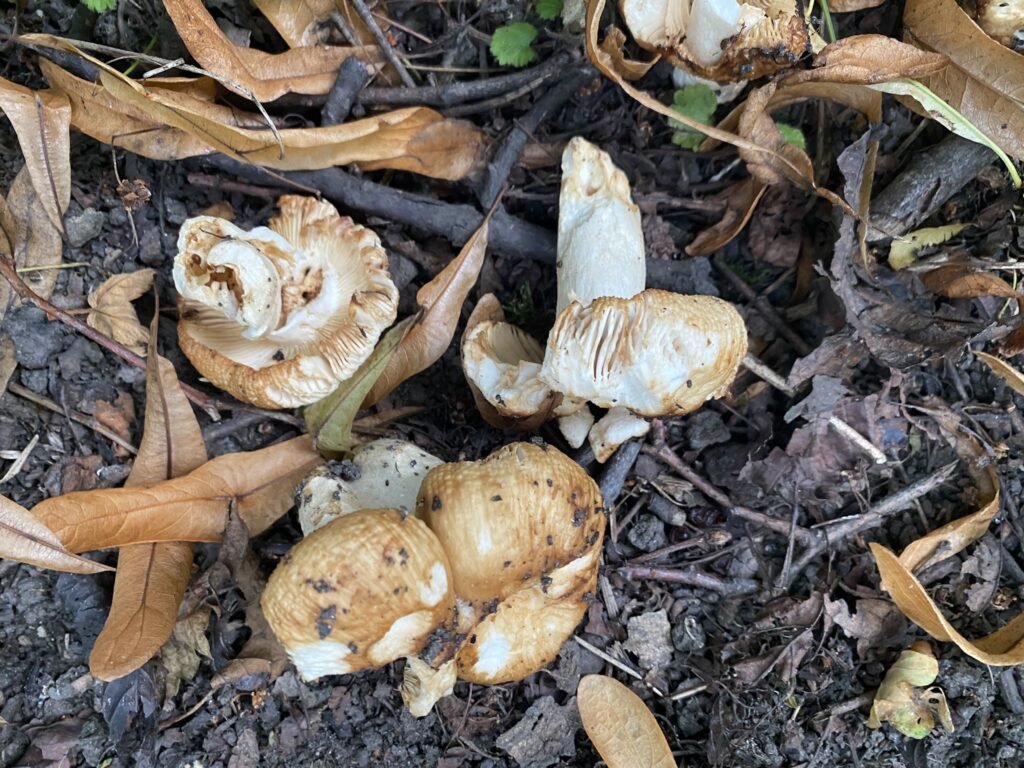
Stinking russula?
possibly Russula foetens
July
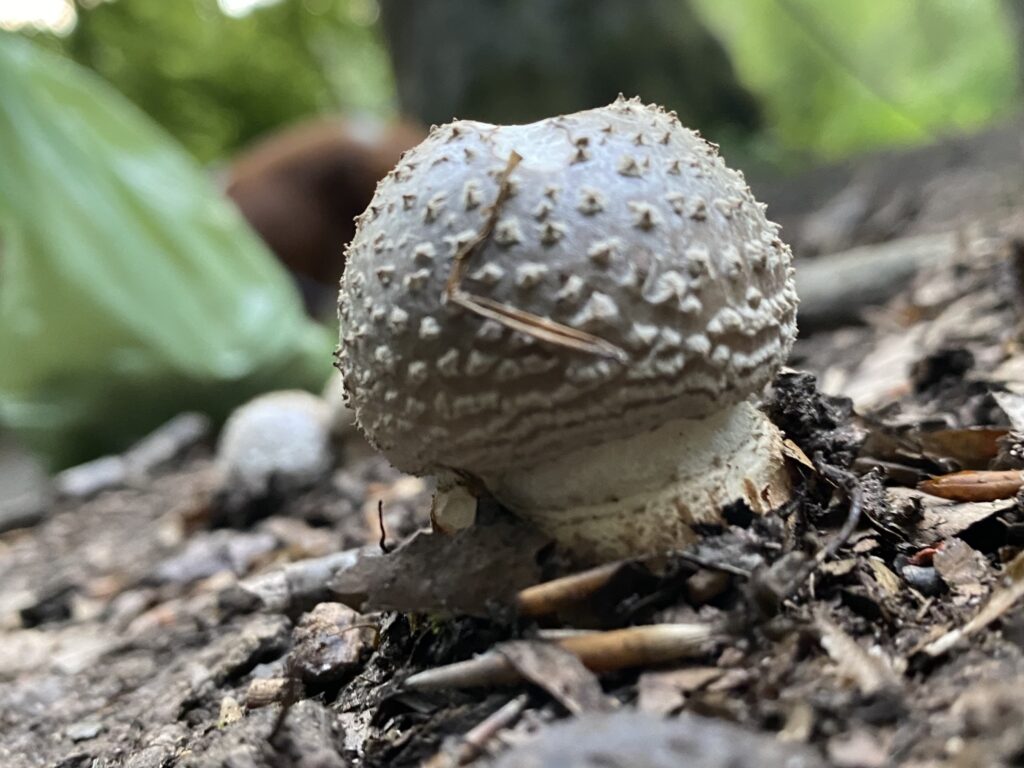
Grey spotted amanita
Amanita excelsa
July
Amanita includes several varieties that are deadly poisonous, including the infamous Death Cap mushroom
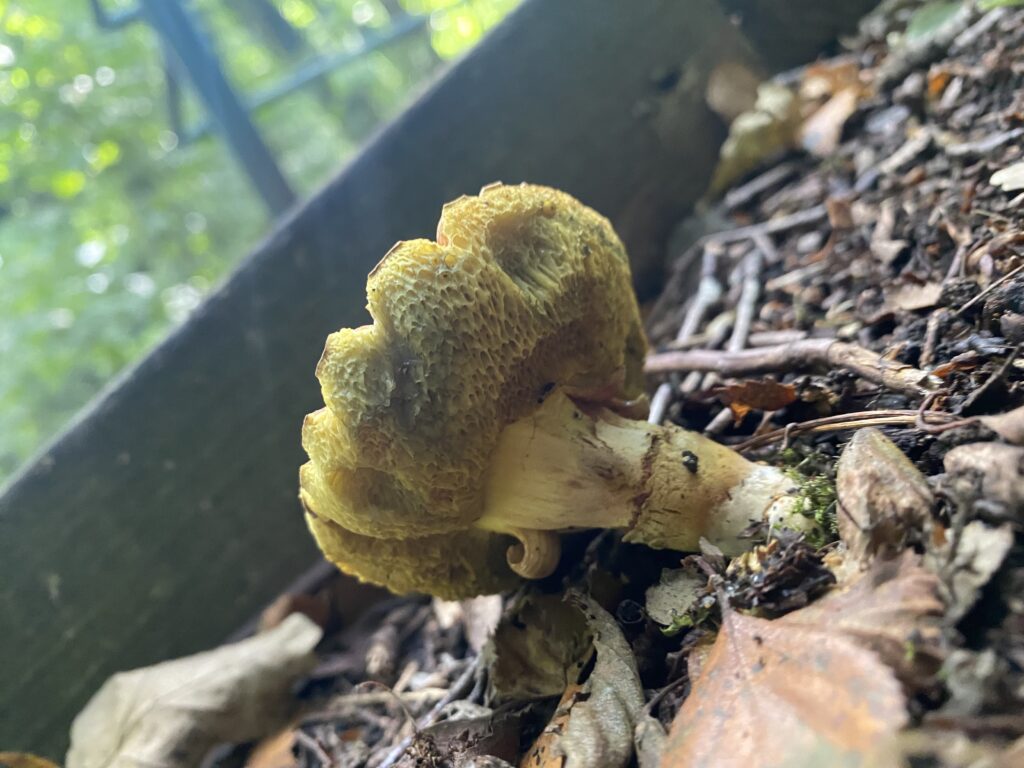
Velvet Bolete
Suillus variegatus
July
Technically it is edible but is apparently lacking in flavour.
Lurid Bolete
Suillellus luridus
July
Toxic raw
Common Earthball
Scleroderma citrinum
July
Toxic
Deer Shield
Pluteus cervinus
July
considered edible by some sources. Rather bland flavour and potential for confusion with inedible species
Grey Bolete?
July
False Deathcap
Amanita citrina
September
Clouded Funnel
Clitocybe nebularis
October
Also known as Clouded Agaric. Not to be confused with Trooping Funnel which is edible.
Scaly Puffball / Stump Puffball
October
White Saddle
Helvella crispa
October
sometimes listed as “edible when cooked,” contain monomethylhydrazine-like toxins, similar to false morels, and can cause poisoning if undercooked.
Grey Knight
(Tricholoma terreum)
October
Grey Spotted Amanita
October
(Amanita excelsa var. spissa)
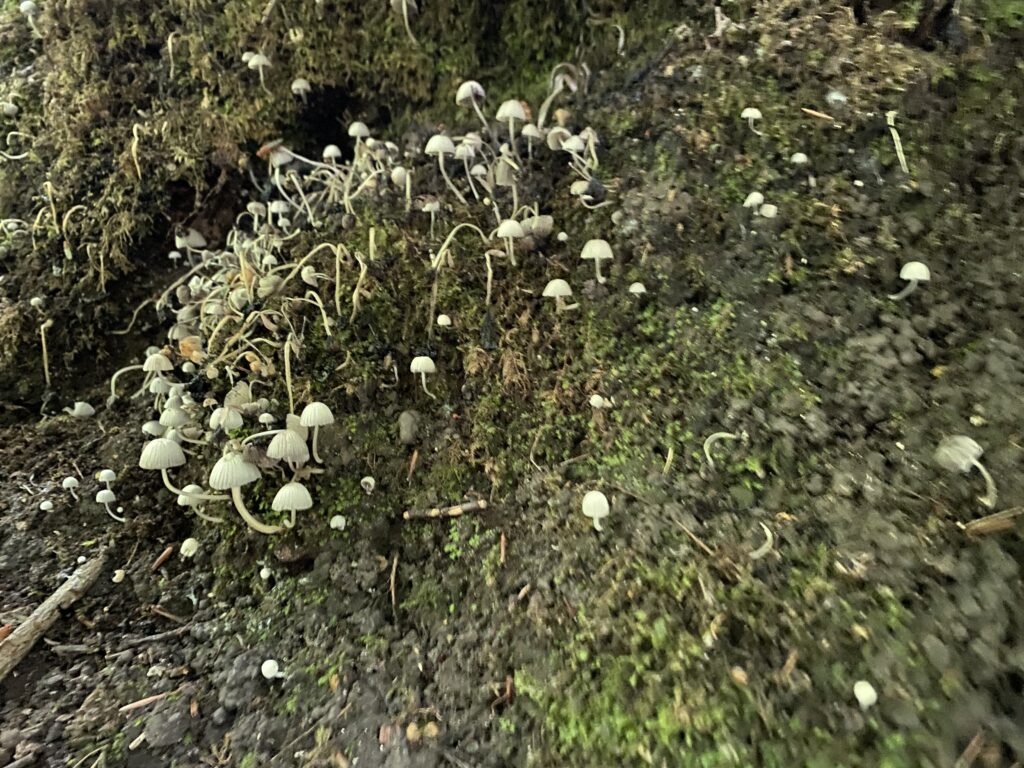
Mycena sp. or Hemimycena
October
Sulphur Tuft
Hypholoma fasciculare
October
Beechwood Sickener
Russula nobilis
October
Fleecy Milkcap
Lactarius vellereus
October
Fly Agaric
Amanita muscaria
October
Clustered Bonnet
Mycena inclinata
October
Common Bonnet
Mycena galericulata
October
Waxcap
Hygrocybe coccinea or H. punicea
October
The Blusher
Amanita rubescens
October
Brown Roll-rim
Paxillus involutus
Autumn
Toxic
Garden near woods, but also found in the woods
Other plants
I could list hundreds of plants but I’ll pick some notable ones
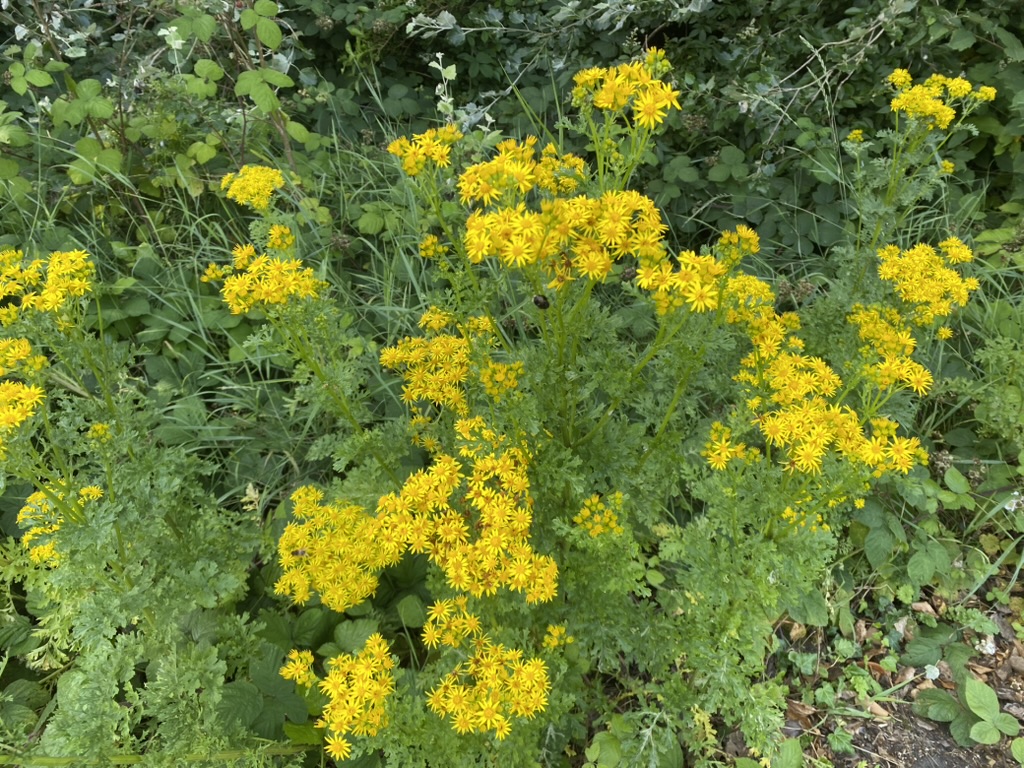
Common Ragwort
Flowers June July
Can be poisonous to livestock and dogs
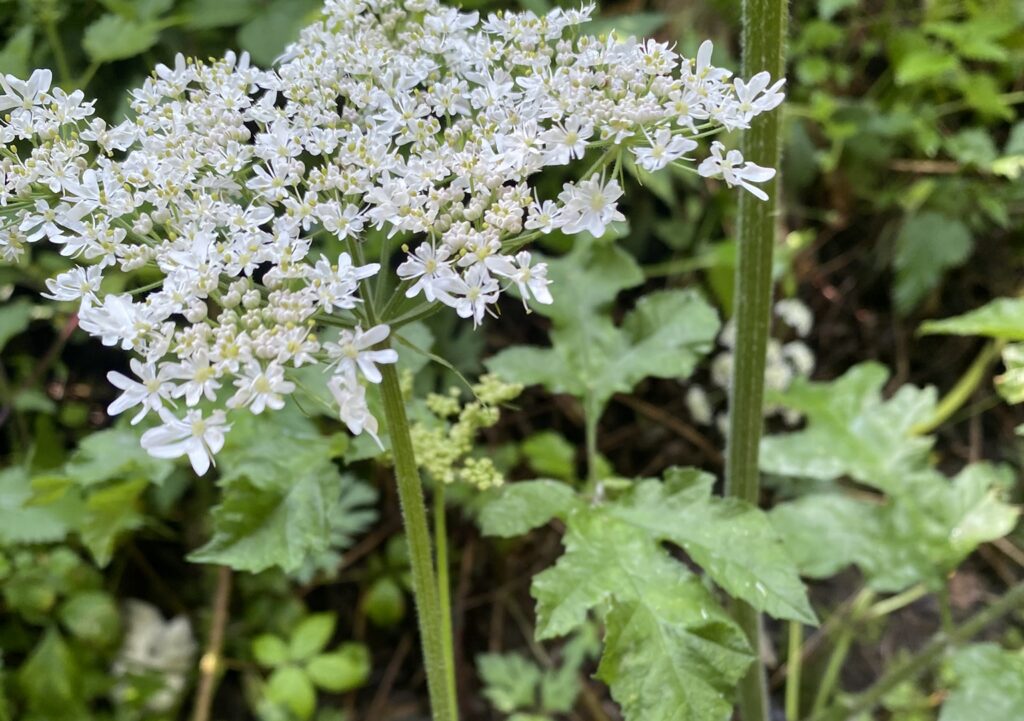
Giant Hogweed
Flowers June July
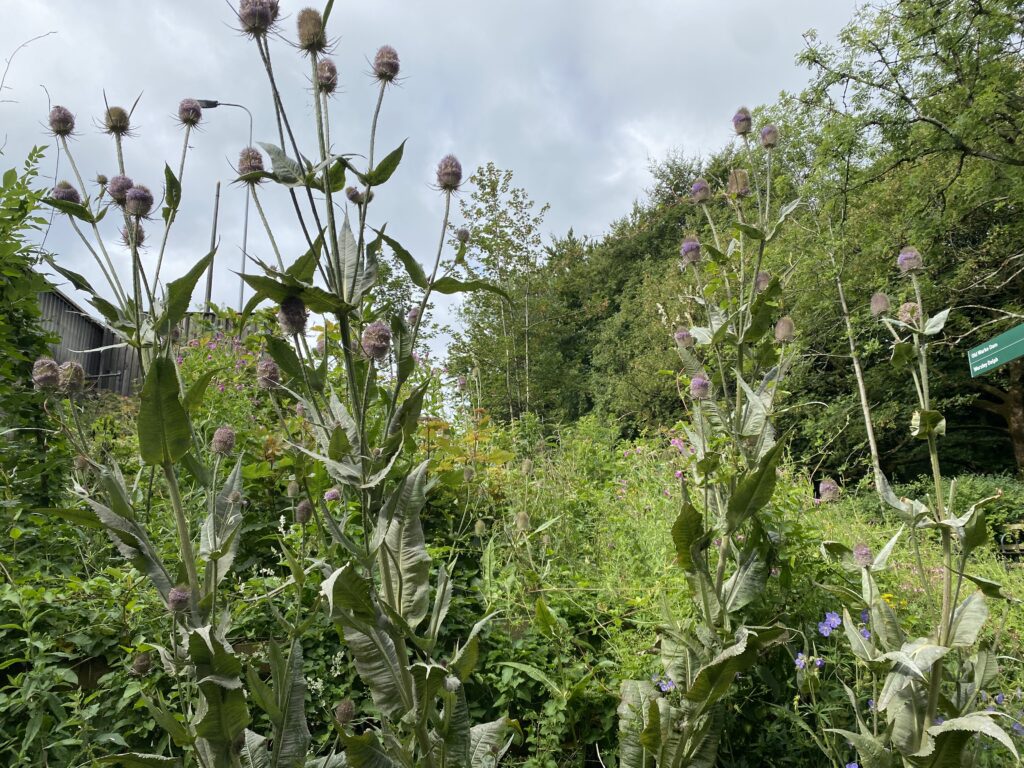
Wild Teasel
June/July
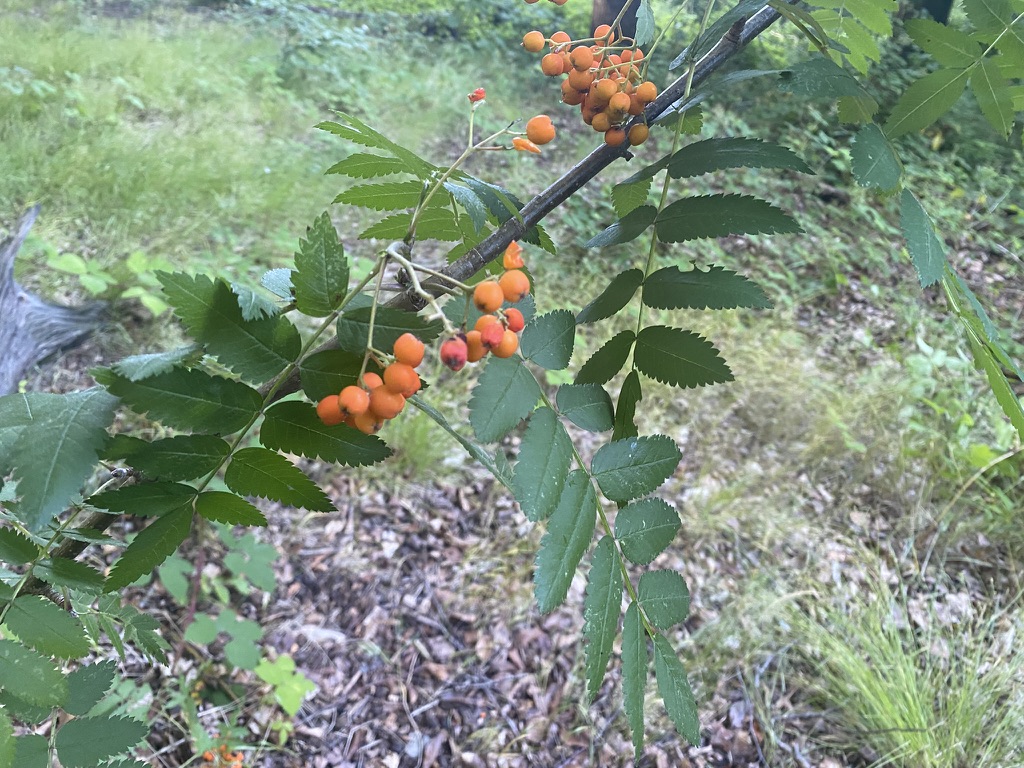
Red Elderberry
July/August
Raw berries are toxic.
White Dogwood
July/August
Berries are toxic.
Redshank
July/August
(Persicaria maculosa), also known in the UK as Redleg, Lady’s-thumb, or Spotted Lady’s-thumb Found at the edge of field bordering the wood
Butterbur
Spring to autumn
Rhubarb-like but inedible amd toxic to the liver.
Lilac-flowering mustard hybrid?
Summer
Found in field bordering the woods. Probably sown as cover crop.